
AI Security Challenges in Multi-Cloud and Space-Based Architectures
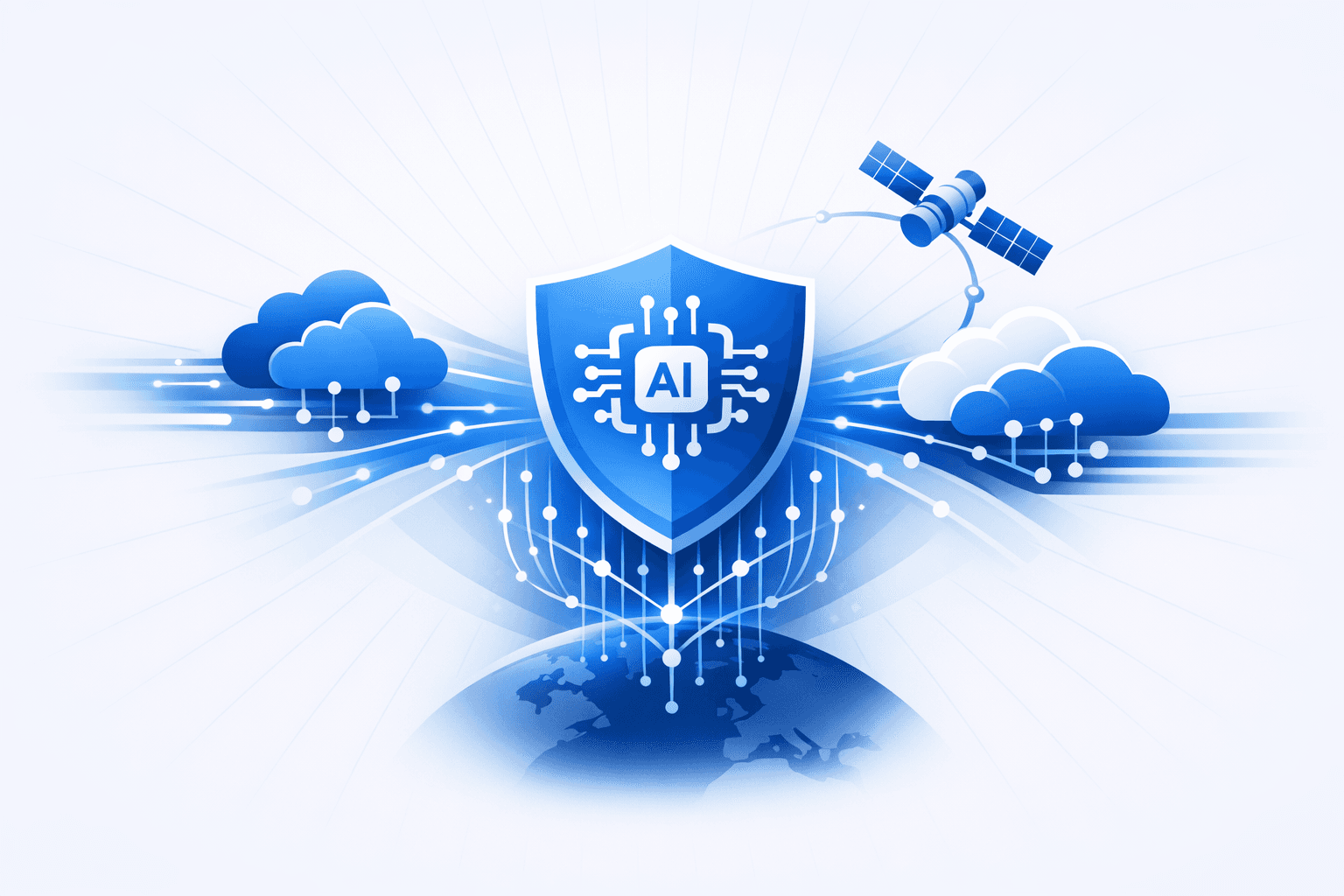
Organizations are facing unprecedented complexity in securing artificial intelligence (AI) systems as they integrate across multi-cloud environments and even extend into space-based architectures. The proliferation of AI capabilities within major Software-as-a-Service (SaaS) platforms has led to a surge in interconnectivity, with enterprise data now distributed across a patchwork of clouds, databases, and SaaS tools. This interconnected landscape introduces significant data governance and security risks, as each platform has its own unique configuration, visibility, and access control mechanisms. The challenge is compounded by the fact that AI workloads require new types of data movement, access models, and identity management, which traditional multi-cloud strategies are ill-equipped to handle. Data governance becomes central, as organizations must maintain strong classification, control, and visibility over data that is replicated and accessed across multiple AI platforms. Inconsistent policies and roles across different environments make it difficult to enforce uniform security standards. The risk is further heightened by the need for comprehensive user data deletion, as residual data from inactive or deleted users can persist in various systems, including CRMs, analytics tools, and collaboration platforms. If such data is inadvertently used in AI training or inference pipelines, it can lead to compliance violations and reputational damage. Regulatory requirements such as the EU’s right to be forgotten and California's Do Not Share or Sell laws are increasing the pressure on organizations to implement robust data deletion processes. Meanwhile, the expansion of AI security concerns into space-based systems introduces new architectural questions. Commercial satellite constellations now rely on AI to automate security, detect anomalies, and recommend countermeasures, but must decide whether to centralize AI control on the ground or distribute it across satellites. Centralized models offer powerful training but suffer from latency, while distributed and federated models improve response times and privacy but introduce synchronization and resource challenges. The convergence of these issues highlights the urgent need for organizations to rethink their AI security architectures, ensuring consistent governance, robust identity and data management, and adaptable security models that can operate effectively across both terrestrial and extraterrestrial environments. As AI becomes more deeply embedded in critical infrastructure, the stakes for securing data, identities, and systems across diverse platforms have never been higher. Security leaders must prioritize not only access control but also the lifecycle management of user data to mitigate emerging risks. The complexity of managing security across such varied environments demands new frameworks and tools capable of providing visibility, control, and rapid response. Failure to address these challenges could expose organizations to regulatory penalties, data breaches, and operational disruptions. The evolving landscape requires a holistic approach to AI security that spans cloud, SaaS, and space-based assets, integrating technical, operational, and compliance considerations. Only by addressing these multifaceted risks can organizations fully realize the benefits of AI while safeguarding their most valuable assets.
Get ahead of threats like this
Mallory correlates global threat intelligence with your attack surface — know if you’re exposed before adversaries strike.
How this story unfolded
4 events from the most recent confirmed update back to the earliest known activity.
Researchers outline resilience and recovery priorities for satellite AI security
The reference highlights incident recovery and resilience considerations for space security architectures, including secure backups, use of inter-satellite links to speed recovery propagation, and the ongoing risk of social engineering against satellite control centers. It also identifies future research areas such as tenant isolation, data confidentiality, digital twins, split learning, and hybrid onboard/ground AI approaches.
Simulations find centralized learning trains faster but scales worse for inference latency
According to the study's simulations, centralized learning reached target accuracy much faster than federated learning, but centralized inference latency increased as more satellites were added. Federated inference latency remained comparatively stable as constellation size grew.
Study compares centralized, distributed, and federated AI for satellite security
A study discussed in the reference evaluated three AI deployment architectures for commercial satellite constellation cybersecurity: centralized, distributed, and federated. It examined trade-offs in training speed, detection latency, privacy, and operational complexity for moving satellite endpoints connected by delay-prone links.
Cloud providers expand ground-based space AI and satellite service integrations
The article cites an industry trend toward centralized, ground-based space operations supported by major providers, including AWS Ground Station with SageMaker and digital twin integration, Microsoft Azure Orbital under SLI, and Google Cloud's partnership with SpaceX. No specific dates for these developments are provided in the reference.
Related entities
Vulnerabilities, threat actors, malware, products, organizations, and breaches Mallory has linked to this story.
Sources
3 references tracked. Mallory keeps watching after this page renders.
Three ways to secure AI across cloud apps
scworld.com
Open sourceWhy deep user deletion is just as critical as your identity layer
scworld.com
Open sourceRethinking AI security architectures beyond Earth
helpnetsecurity.com
Open sourceSee the full picture, correlated to your attack surface.
Map indicators from this story to your assets and identify affected systems in minutes.
Every observed campaign, victim, and pivot linked to actors named in this story.
Malware, exploits, and IOCs connected to the activity described here.
YARA, Sigma, and Snort rules deployed to your SIEM as soon as they’re published.
Get matching new stories delivered to your team as they break — not the next morning.
Ask questions about this story and take action on the answers.
Related stories
Other stories Mallory is tracking that overlap on entities, sources, or topic labels.

AI Governance and Security Challenges in Enterprise Environments
Enterprises are facing a critical inflection point as artificial intelligence becomes deeply embedded across organizational layers, fundamentally altering cyber risk and security postures. Research from industry leaders and the Cloud Security Alliance highlights that mature governance frameworks are now the primary differentiator for organizations confident in their ability to secure AI systems. As AI agents and machine identities proliferate, traditional identity and access management models are proving inadequate, with identity emerging as the new control plane for managing AI risk. The rapid adoption of AI, often without sufficient oversight, is creating new blind spots, expanding attack surfaces, and introducing risks such as shadow AI, where unsanctioned tools and agents operate outside established security controls. Security teams are increasingly involved in AI adoption, leveraging AI for detection, investigation, and response, but the lack of comprehensive governance and workforce training remains a significant barrier. The convergence of AI with other technologies, such as blockchain and cryptocurrency, is also driving the emergence of autonomous financial systems and agentic payments, further complicating the security landscape. Success in this new paradigm requires balancing innovation with robust accountability, ensuring that AI-driven systems are auditable and governed rather than left to unconstrained automation. As organizations move from experimentation to operational deployment of AI, the need for continuous, data-aware identity security and formal governance policies is paramount to mitigate risks, ensure compliance, and maintain confidence in AI-enabled operations.
Mar 21, 2026
Emerging Data Risks and Security Challenges from Enterprise AI Adoption
Enterprises are rapidly integrating artificial intelligence (AI) into their core operations, leading to a significant increase in both the scale and complexity of cybersecurity risks. Autonomous AI agents, once limited to providing suggestions, now act independently within enterprise systems, accessing sensitive data, executing transactions, and triggering downstream workflows without human oversight. These agents, often deployed by individual teams or embedded in third-party software, can inadvertently ingest confidential information, such as customer credit card data, even if the data is only briefly accessible. Unlike human users, AI agents lack contextual understanding and ethical judgment, acting continuously and at scale, which introduces a new category of 'Shadow AI' risk. Multimodal AI systems, which process multiple input streams to generate more human-like outputs, further expand the attack surface. Adversaries can exploit these systems by manipulating data inputs, such as subtly altering images or text, to deceive the AI and bypass security controls. Research has demonstrated that these attacks are not merely theoretical; adversarial manipulations can evade detection and cause significant harm, especially in critical sectors like defense, healthcare, and finance. Organizations are increasingly aware of the dangers posed by AI-augmented threats, including deepfakes and AI-driven social engineering, but many lag in implementing effective technical defenses. Surveys indicate that while a majority of firms have experienced deepfake or AI-voice fraud attempts, more than half have suffered financial losses as a result. Despite this, investment in detection and mitigation technologies remains inadequate, and many companies overestimate their preparedness. The surge in AI adoption is reflected in corporate disclosures, with over 70% of S&P 500 firms now reporting AI as a material risk, up from just 12% two years prior. Reputational and cybersecurity risks are the most frequently cited concerns, followed by legal and regulatory challenges as governments move to establish AI-specific compliance requirements. However, only a minority of corporate boards have formally integrated AI oversight into their governance structures, highlighting a gap between risk awareness and actionable governance. The lack of comprehensive frameworks for managing AI risk leaves organizations vulnerable to both technical and compliance failures. As AI becomes more deeply embedded in business processes, the need for robust governance, continuous education, and responsible-use frameworks becomes increasingly urgent. Security and governance leaders must adapt to this new frontier by developing strategies that address the unique risks posed by autonomous and multimodal AI systems. Failure to do so could result in significant financial, operational, and reputational damage as adversaries continue to exploit the evolving AI landscape.
Mar 21, 2026
Enterprise Security Challenges and Frameworks for AI Adoption
The rapid integration of AI technologies into enterprise environments is introducing new security challenges that traditional controls are not equipped to handle. Organizations are grappling with how to secure AI models, data, and autonomous agents, as well as how to operationalize AI security across the entire lifecycle. Security leaders emphasize the need for clear frameworks that address the unique risks posed by AI, including misconfigurations, configuration drift, and the importance of focusing on outcomes rather than simply adding more tools or dashboards. Efficiency, automation, and prioritization are highlighted as critical factors in reducing real risk, with a shift from compliance-driven approaches to measurable security outcomes. Industry experts stress that many organizations are "over-tooled but under-protected," with operational blind spots and unused controls creating exposure long before sophisticated attacks occur. The conversation around AI in security is moving beyond tool acquisition to ensuring that existing capabilities are properly configured and operationalized. This evolving landscape requires security teams to rethink governance, data protection, and the deployment of AI-enabled solutions, with a focus on practical frameworks and exposure management to address the complexities of modern enterprise environments.
Mar 21, 2026