
Challenges and Implications of AI-Driven Surveillance and Facial Recognition
Artificial intelligence and machine learning have fundamentally transformed the landscape of surveillance, shifting from labor-intensive, targeted operations to pervasive, automated monitoring. In the past, surveillance required significant human effort, such as physically following suspects, intercepting mail, or installing wiretaps, which inherently limited the scale and scope of government monitoring. The digitization of society, however, has enabled the collection and analysis of vast amounts of data through interconnected devices, sensors, and networks. Modern surveillance now leverages technologies like automated license plate readers, geofence warrants, and a proliferation of smart devices, all of which generate continuous streams of telemetry stored in the cloud. This shift has made it possible for authorities and private entities to monitor individuals on an unprecedented scale, raising significant concerns about privacy and civil liberties. One of the most prominent applications of AI in surveillance is facial recognition technology, which is increasingly used for identity verification in both public and private sectors. However, the widespread adoption of facial recognition systems has exposed critical flaws, particularly for individuals with facial differences or disabilities. People with conditions such as Freeman-Sheldon syndrome report being repeatedly rejected by automated systems, leading to exclusion from essential services like renewing a driver's license. These failures highlight the lack of inclusivity and robustness in current AI models, which often do not account for the diversity of human appearances. The reliance on facial recognition for access to services can result in humiliation, frustration, and systemic discrimination for affected individuals. As more organizations and government agencies implement these technologies, the risk of marginalizing vulnerable populations increases. The integration of AI into surveillance also raises questions about data security, consent, and the potential for abuse by both state and non-state actors. The aggregation of personal data from wearables, smart home devices, and public cameras creates rich profiles that can be exploited for commercial or political purposes. Civil liberties advocates warn that the efficiency and scale of AI-driven surveillance erode traditional safeguards against overreach, making it easier to monitor entire populations without due process. The debate continues over how to balance the benefits of enhanced security and convenience with the need to protect individual rights and ensure equitable access to services. Policymakers and technologists are called upon to address these challenges by developing more inclusive algorithms, establishing clear regulations, and promoting transparency in the deployment of surveillance technologies. The evolution of surveillance in the AI era underscores the urgent need for societal dialogue and legal frameworks that keep pace with technological advancements.
Get ahead of threats like this
Mallory correlates global threat intelligence with your attack surface — know if you’re exposed before adversaries strike.
How this story unfolded
1 event from the most recent confirmed update back to the earliest known activity.
Story first reported
Initial story creation
Sources
2 references tracked. Mallory keeps watching after this page renders.
See the full picture, correlated to your attack surface.
Map indicators from this story to your assets and identify affected systems in minutes.
Every observed campaign, victim, and pivot linked to actors named in this story.
Malware, exploits, and IOCs connected to the activity described here.
YARA, Sigma, and Snort rules deployed to your SIEM as soon as they’re published.
Get matching new stories delivered to your team as they break — not the next morning.
Ask questions about this story and take action on the answers.
Related stories
Other stories Mallory is tracking that overlap on entities, sources, or topic labels.
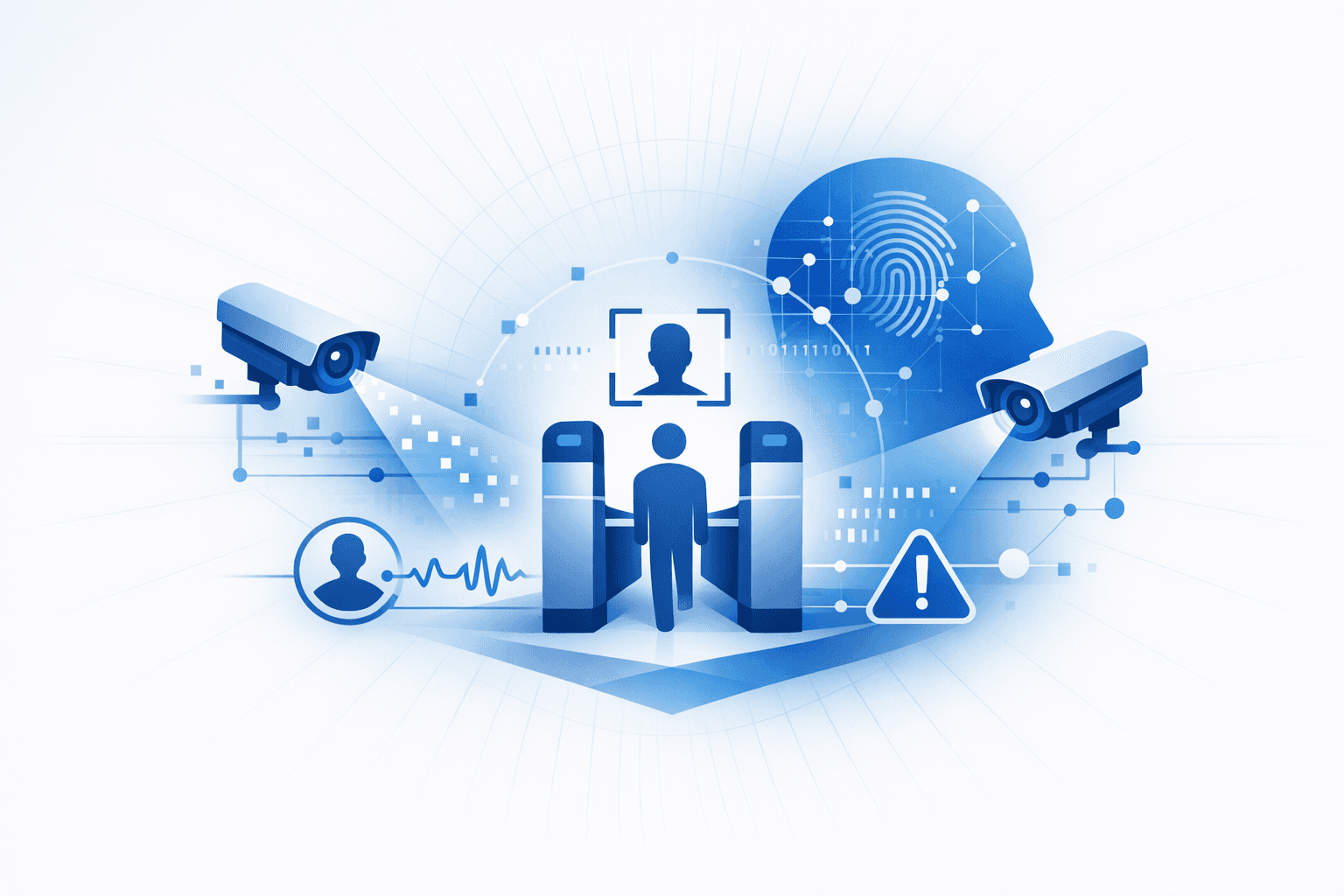
Expansion of AI-Enabled Camera Surveillance Raises Privacy and Biometric Identification Concerns
The New York Metropolitan Transportation Authority (MTA) is testing new subway gates that use **AI-powered cameras** to capture short recordings when riders are suspected of fare evasion and to generate a physical description that is transmitted to the MTA, prompting criticism from privacy advocates concerned about persistent monitoring in public transit. The MTA has also solicited vendor input for systems using computer vision and AI to detect “unusual or unsafe behaviors,” reflecting broader growth in surveillance deployments across New York City. In parallel, consumer **AI smart glasses** are re-emerging with built-in cameras and microphones, intensifying concerns that everyday wearables can enable covert recording and downstream biometric identification. Reporting highlighted that footage from *Ray-Ban Meta* smart glasses can be paired with external facial-recognition services to identify strangers, and noted policy issues such as cloud storage of wake-word voice recordings (potentially retained up to a year) and uncertainty about future features like on-device facial recognition; retailers in New York (e.g., Wegmans and others) are also expanding facial-recognition use, underscoring the convergence of AI, biometrics, and surveillance in both public and commercial spaces.
Mar 21, 2026
Emerging Data Risks and Security Challenges from Enterprise AI Adoption
Enterprises are rapidly integrating artificial intelligence (AI) into their core operations, leading to a significant increase in both the scale and complexity of cybersecurity risks. Autonomous AI agents, once limited to providing suggestions, now act independently within enterprise systems, accessing sensitive data, executing transactions, and triggering downstream workflows without human oversight. These agents, often deployed by individual teams or embedded in third-party software, can inadvertently ingest confidential information, such as customer credit card data, even if the data is only briefly accessible. Unlike human users, AI agents lack contextual understanding and ethical judgment, acting continuously and at scale, which introduces a new category of 'Shadow AI' risk. Multimodal AI systems, which process multiple input streams to generate more human-like outputs, further expand the attack surface. Adversaries can exploit these systems by manipulating data inputs, such as subtly altering images or text, to deceive the AI and bypass security controls. Research has demonstrated that these attacks are not merely theoretical; adversarial manipulations can evade detection and cause significant harm, especially in critical sectors like defense, healthcare, and finance. Organizations are increasingly aware of the dangers posed by AI-augmented threats, including deepfakes and AI-driven social engineering, but many lag in implementing effective technical defenses. Surveys indicate that while a majority of firms have experienced deepfake or AI-voice fraud attempts, more than half have suffered financial losses as a result. Despite this, investment in detection and mitigation technologies remains inadequate, and many companies overestimate their preparedness. The surge in AI adoption is reflected in corporate disclosures, with over 70% of S&P 500 firms now reporting AI as a material risk, up from just 12% two years prior. Reputational and cybersecurity risks are the most frequently cited concerns, followed by legal and regulatory challenges as governments move to establish AI-specific compliance requirements. However, only a minority of corporate boards have formally integrated AI oversight into their governance structures, highlighting a gap between risk awareness and actionable governance. The lack of comprehensive frameworks for managing AI risk leaves organizations vulnerable to both technical and compliance failures. As AI becomes more deeply embedded in business processes, the need for robust governance, continuous education, and responsible-use frameworks becomes increasingly urgent. Security and governance leaders must adapt to this new frontier by developing strategies that address the unique risks posed by autonomous and multimodal AI systems. Failure to do so could result in significant financial, operational, and reputational damage as adversaries continue to exploit the evolving AI landscape.
Mar 21, 2026
AI's Transformative Impact on Cybersecurity Operations and Threat Landscape
Artificial intelligence is fundamentally reshaping the cybersecurity landscape, introducing both new opportunities and significant risks for organizations and professionals. The adoption of AI tools is accelerating the learning curve for cybersecurity practitioners, enabling faster skill acquisition, automated reconnaissance, and streamlined exploit generation, as highlighted by experts who advocate for integrating AI into bug hunting and security research workflows. However, this technological leap is also disrupting traditional career paths, with studies showing a marked decline in entry-level cybersecurity and IT jobs as AI automates routine tasks such as help desk support, manual testing, and security monitoring. Industry leaders emphasize the need for IT teams to adapt by acquiring new skillsets and focusing on strategic problem-solving, as the majority of job skills are expected to change dramatically by 2030 due to AI's influence. Concurrently, the rise of autonomous AI agents introduces a new class of security risks, as these systems possess the ability to make independent decisions, access sensitive data, and execute code across networks, often in ways that are opaque and difficult to audit. The lack of robust identity management and oversight for these agentic systems leaves organizations vulnerable to novel attack vectors, including black box attacks where the root cause of malicious or erroneous actions is nearly impossible to trace. Deepfake technology, powered by generative AI, is rapidly becoming a favored tool for social engineering attacks, with a significant increase in organizations reporting incidents involving AI-generated impersonations of executives and employees. This trend is eroding traditional trust mechanisms, such as voice and video verification, and forcing security teams to rethink their authentication strategies. Ethical concerns are also at the forefront, as CISOs and boards are urged to monitor for red flags such as loss of human agency, lack of technical robustness, and data privacy risks associated with AI deployments. Regulatory frameworks and responsible AI governance are becoming essential to ensure that AI systems are deployed safely and ethically, particularly in sectors like financial services where the stakes are high. The convergence of these factors is creating a dynamic environment where cybersecurity professionals must continuously adapt to the evolving threat landscape, leveraging AI for defense while remaining vigilant against its misuse. As organizations rush to deploy AI-driven solutions, the need for comprehensive security strategies, ongoing workforce development, and ethical oversight has never been more critical. The future of cybersecurity will be defined by the ability to harness AI's power responsibly while mitigating its inherent risks, ensuring both operational resilience and trust in digital systems.
Mar 21, 2026