
Credential Theft via Phishing and Social Engineering Techniques
Attackers are increasingly leveraging simple yet effective phishing and social engineering tactics to steal user credentials. One observed method involves sending phishing emails with malicious attachments, such as .shtml files, that present fake login screens to unsuspecting victims. These screens are designed to capture any credentials entered and immediately transmit them to attackers via Telegram bots, making detection and takedown more difficult. The phishing campaigns often use compromised legitimate email accounts and minimal social engineering, relying on the likelihood of password reuse across multiple sites to maximize the value of stolen credentials.
Another prevalent technique targets iPhone owners whose devices have been lost or stolen. Scammers exploit the contact information displayed on the device's lock screen to send convincing messages that mimic Apple's Find My service, tricking victims into entering their Apple ID credentials on fake websites. With these credentials, attackers can unlock, wipe, and resell the devices, as well as access sensitive personal data. These attacks highlight the ongoing evolution of credential theft tactics, emphasizing the need for vigilance against both low-sophistication phishing and more targeted social engineering schemes.
Get ahead of threats like this
Mallory correlates global threat intelligence with your attack surface — know if you’re exposed before adversaries strike.
How this story unfolded
2 events from the most recent confirmed update back to the earliest known activity.
Malwarebytes reports scammers phish Apple ID credentials from stolen iPhone owners
Malwarebytes published a report explaining that stolen iPhones remain difficult to unlock until scammers trick victims into revealing their Apple ID credentials through phishing. The article highlights credential theft as a key step enabling abuse of stolen devices.
Malwarebytes publishes analysis of low-skill credential phishing tactics
Malwarebytes published a threat-intelligence article describing how credentials can be stolen within seconds using relatively unsophisticated phishing techniques. The piece indicates that even script-kiddie-level phishing can quickly capture user logins.
Sources
2 references tracked. Mallory keeps watching after this page renders.
How credentials get stolen in seconds, even with a script-kiddie-level phish | Malwarebytes
malwarebytes.com
Open sourceStolen iPhones are locked tight, until scammers phish your Apple ID credentials | Malwarebytes
malwarebytes.com
Open sourceSee the full picture, correlated to your attack surface.
Map indicators from this story to your assets and identify affected systems in minutes.
Every observed campaign, victim, and pivot linked to actors named in this story.
Malware, exploits, and IOCs connected to the activity described here.
YARA, Sigma, and Snort rules deployed to your SIEM as soon as they’re published.
Get matching new stories delivered to your team as they break — not the next morning.
Ask questions about this story and take action on the answers.
Related stories
Other stories Mallory is tracking that overlap on entities, sources, or topic labels.
Phishing Campaigns Abuse Trusted Platforms and Legitimate Workflows to Evade Detection
Multiple campaigns are abusing *legitimate* cloud and platform workflows to make phishing and fraud harder to detect. Attackers are generating real Apple and PayPal invoice/dispute emails and embedding scam phone numbers in user-controlled fields (e.g., “seller notes”), resulting in messages that carry valid **DKIM** signatures and originate from high-reputation domains; this “**DKIM replay**” style abuse bypasses many email controls because authentication validates the sender domain, not the safety of the embedded content. In parallel, threat actors are leveraging free **Google Firebase** developer accounts to host brand-mimicking phishing pages on trusted `firebaseapp.com` / `web.app` subdomains, increasing delivery and click-through rates by exploiting domain reputation and common allowlisting of Google infrastructure. A separate but related social-engineering technique targets **Telegram** users by manipulating Telegram’s official authentication workflows to obtain fully authorized sessions rather than simply stealing passwords. Victims are lured to Telegram-lookalike pages (often on ephemeral domains) that prompt QR scanning or phone-number entry; user interaction triggers a real login attempt initiated by the attacker, and once the victim approves the authorization prompt on their device, the attacker gains persistent account access and can pivot to follow-on attacks via the victim’s contacts. These incidents collectively highlight a shift toward “living off trusted services,” where adversaries avoid compromising vendors and instead weaponize legitimate features, trusted domains, and sanctioned authentication flows to reduce detection and increase victim compliance.
Jun 29, 2026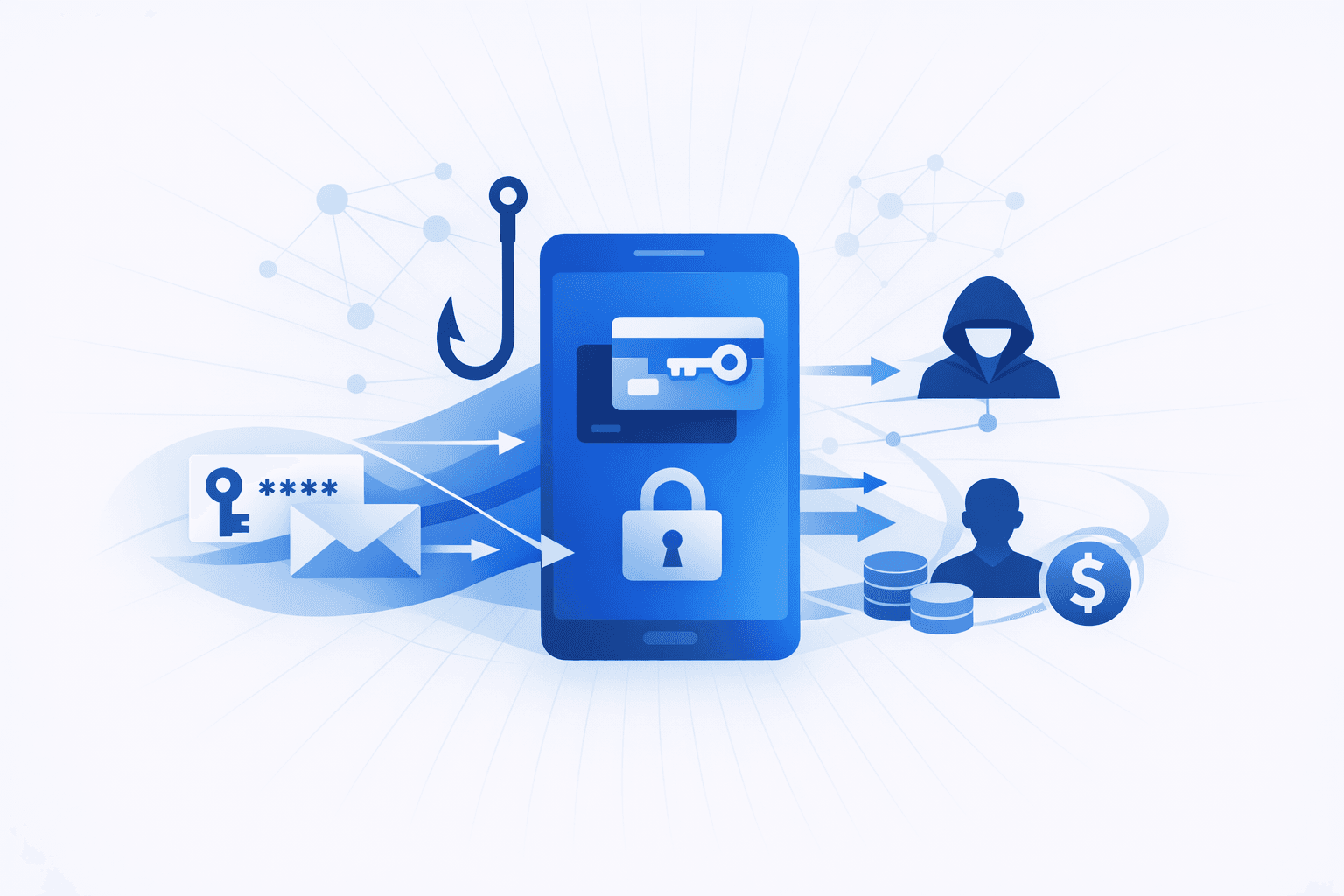
Social Engineering Scams Exploiting Mobile Device Features to Steal Credentials and Funds
Cybercriminals are increasingly leveraging built-in features of popular mobile platforms to execute sophisticated social engineering scams aimed at stealing sensitive credentials and financial assets. On WhatsApp, scammers exploit the screen-sharing function by impersonating trusted entities such as bank employees or support agents, coercing victims into sharing their screens under the pretense of resolving urgent security issues. This access enables attackers to view and capture one-time passwords (OTPs), banking details, and other personal information, resulting in significant financial losses. In response, Meta has introduced AI-powered safety tools, including real-time warnings when users attempt to share their screens with unknown contacts, to mitigate these attacks. Similarly, iPhone users are being targeted through phishing campaigns that exploit the "Find My" feature. After a device is lost or stolen, scammers send convincing fake messages—purportedly from Apple Support—containing links that claim to help locate the missing phone. By leveraging accurate device details and the victim's sense of urgency, attackers trick users into divulging their Apple ID credentials, potentially granting full access to personal data and accounts. Authorities such as Switzerland’s National Cyber Security Centre have issued warnings about these tactics, emphasizing the need for heightened vigilance when responding to unsolicited messages related to lost devices.
Jun 29, 2026
Credential Theft and Identity-Based Intrusions Surge Across Enterprises
**Credential compromise** and identity abuse are increasing as attackers rely more on stolen logins, session artifacts, and phishing rather than noisy exploitation alone. Recorded Future reported a sharp rise in exposed credentials during 2025, including nearly **2 billion** credentials indexed from malware combo lists, with the second half of the year up **50%** over the first and Q4 up **90%** over Q1. The trend is being driven by the industrialization of **infostealer malware**, malware-as-a-service ecosystems, and AI-enabled phishing and social engineering, while weak identity governance continues to expand the attack surface. A separate survey of UK organizations found **77%** fail to promptly disable former employees' accounts, **34%** grant overly broad access, and many still use manual processes such as spreadsheets for account validation, creating persistent opportunities for unauthorized access. A targeted phishing attempt against **Outpost24** illustrates how these identity-focused attacks are being operationalized against even security vendors. Attackers used a convincing fake JP Morgan email, valid **DKIM** authentication via Amazon SES infrastructure, and a **seven-stage redirect chain** leveraging trusted brands including Cisco to steer a C-suite executive toward a Microsoft Office credential-harvesting page while evading email defenses. The broader threat environment shows the same shift toward access abuse and stealthier post-compromise tradecraft: Google Threat Intelligence Group found ransomware actors increasingly favor native Windows tools over **Cobalt Strike**, with data theft present in **77%** of incidents and exploitation of VPNs and firewalls still common for initial access. Together, the reporting shows attackers are increasingly **logging in rather than breaking in**, then using legitimate access and built-in tools to deepen compromise and extort victims.
Jun 29, 2026