
SEC Enforcement Against Social Media Crypto Investment Scams
The U.S. Securities and Exchange Commission (SEC) has charged three purported crypto asset trading platforms—Morocoin Tech Corp., Berge Blockchain Technology Co. Ltd., and Cirkor Inc.—along with four investment clubs—AI Wealth Inc., Lane Wealth Inc., AI Investment Education Foundation Ltd., and Zenith Asset Tech Foundation—for orchestrating a fraudulent scheme that targeted retail investors through social media. According to the SEC, these entities misappropriated over $14 million by luring victims with advertisements and group chats that promised profits from AI-generated investment tips, ultimately convincing them to invest in fake crypto trading platforms where their funds were stolen. The operation used sophisticated tactics, including the use of automated trading bots to generate massive volumes of fake transactions, creating the illusion of legitimate trading activity.
This enforcement action is part of a broader regulatory crackdown on crypto-related fraud, with the SEC imposing a record $4.98 billion in cryptocurrency penalties in 2024 alone. The case highlights the growing threat of social media-driven investment scams and the SEC's commitment to pursuing securities fraud that harms retail investors. The agency's complaint details how the fraudsters built trust in online group chats, posed as financial professionals, and systematically exploited individuals interested in cryptocurrency investments, underscoring the need for heightened vigilance among potential investors and continued regulatory oversight in the digital asset space.
Sources
Related Stories
European Police Dismantle €600 Million Cryptocurrency Investment Fraud Network
European law enforcement agencies arrested nine individuals suspected of operating a large-scale cryptocurrency investment fraud network that defrauded victims of over €600 million. The suspects allegedly created dozens of fake cryptocurrency investment platforms, luring victims with promises of high returns through social media ads, cold calls, and fabricated celebrity endorsements. Once funds were transferred, victims were unable to recover their money, while the criminals laundered the stolen assets using blockchain technology. The coordinated operation, led by Eurojust and involving authorities from France, Belgium, Cyprus, Spain, and Germany, resulted in simultaneous arrests and searches in Cyprus, Spain, and Germany, with significant seizures of cash, cryptocurrencies, and bank assets. The investigation revealed that the network used sophisticated methods to conceal the origins of the stolen funds, cycling them through various wallets and exchanges. Authorities seized €800,000 in bank accounts, €415,000 in cryptocurrencies, and €300,000 in cash during the raids. The operation underscores the growing threat of organized cybercrime leveraging fake investment platforms to target individuals across Europe, and highlights the importance of international cooperation in combating large-scale financial fraud in the cryptocurrency sector.
4 months agoSocial Engineering Enterprise Cryptocurrency Theft and Prosecution
A criminal group known as the Social Engineering Enterprise orchestrated large-scale cryptocurrency thefts using social engineering tactics and physical attacks to gain access to victims' digital assets. The group targeted individuals with significant cryptocurrency holdings, either deceiving them into revealing access credentials or physically breaking into their homes to steal devices containing private keys. Law enforcement efforts have led to multiple arrests and guilty pleas, including a California man who admitted to laundering millions in stolen cryptocurrency and facilitating the group's operations by renting luxury properties for their activities. In related developments, a key participant in a $263 million social engineering ring pleaded guilty, and additional members have been indicted and arrested in various locations, including Miami and Dubai. The group's operations began in late 2023 and involved members from the United States and abroad, who coordinated attacks and laundered proceeds through real estate and other means. The ongoing investigation highlights the growing threat of organized cybercrime targeting cryptocurrency holders through both digital and physical means.
3 months ago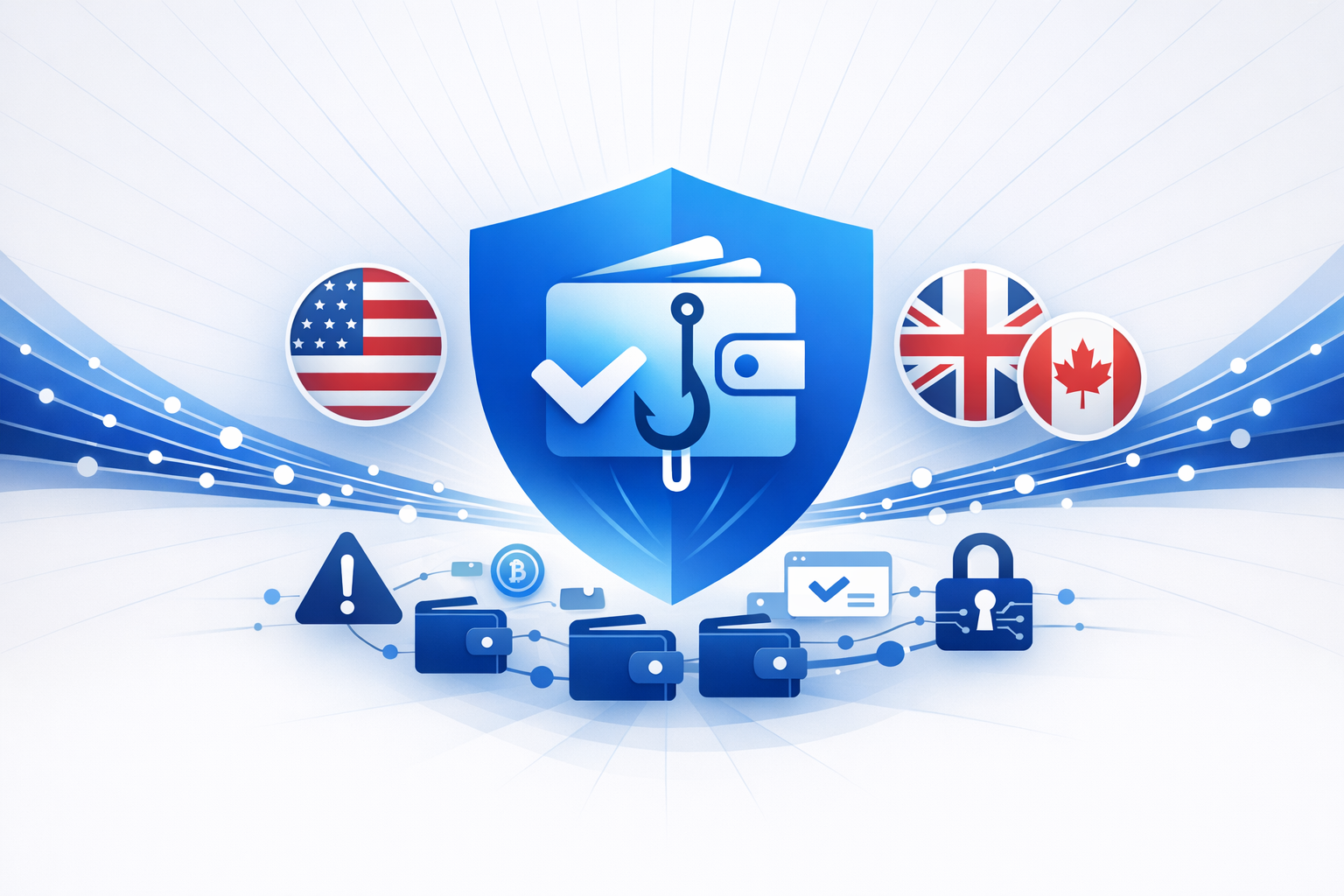
Operation Atlantic Targets Crypto Approval-Phishing Scams
Law enforcement agencies in the **U.S., U.K., and Canada** launched **Operation Atlantic** to disrupt cryptocurrency fraud schemes based on **approval phishing**, in which victims are tricked into authorizing malicious wallet permissions through fake alerts, pop-ups, or spoofed service messages. Once a victim approves access, attackers can drain assets from the wallet, and recovery is difficult because blockchain transactions are generally irreversible. Authorities said the campaign responds to a broader rise in crypto-enabled fraud, with Chainalysis estimating at least **$14 billion** in on-chain scam revenue in 2025 and warning the total could rise as more illicit wallets are identified. The operation builds on earlier anti-fraud efforts including **Project Atlas**, which identified more than **2,000 compromised wallets** across **14 countries**, disrupted roughly **$70 million** in potential fraud, and froze about **$24 million** in stolen cryptocurrency. The same threat pattern is reflected in phishing lures impersonating platforms such as **OpenSea**, where fake offer alerts, account verification notices, and token airdrop messages attempt to push users into connecting wallets to malicious sites. Those examples illustrate the social-engineering tactics now commonly used in approval-phishing campaigns, alongside increasingly sophisticated content and phishing-as-a-service infrastructure.
Today