
US Policy Tightens Controls and Adds Costs on Exports of Advanced AI Accelerators
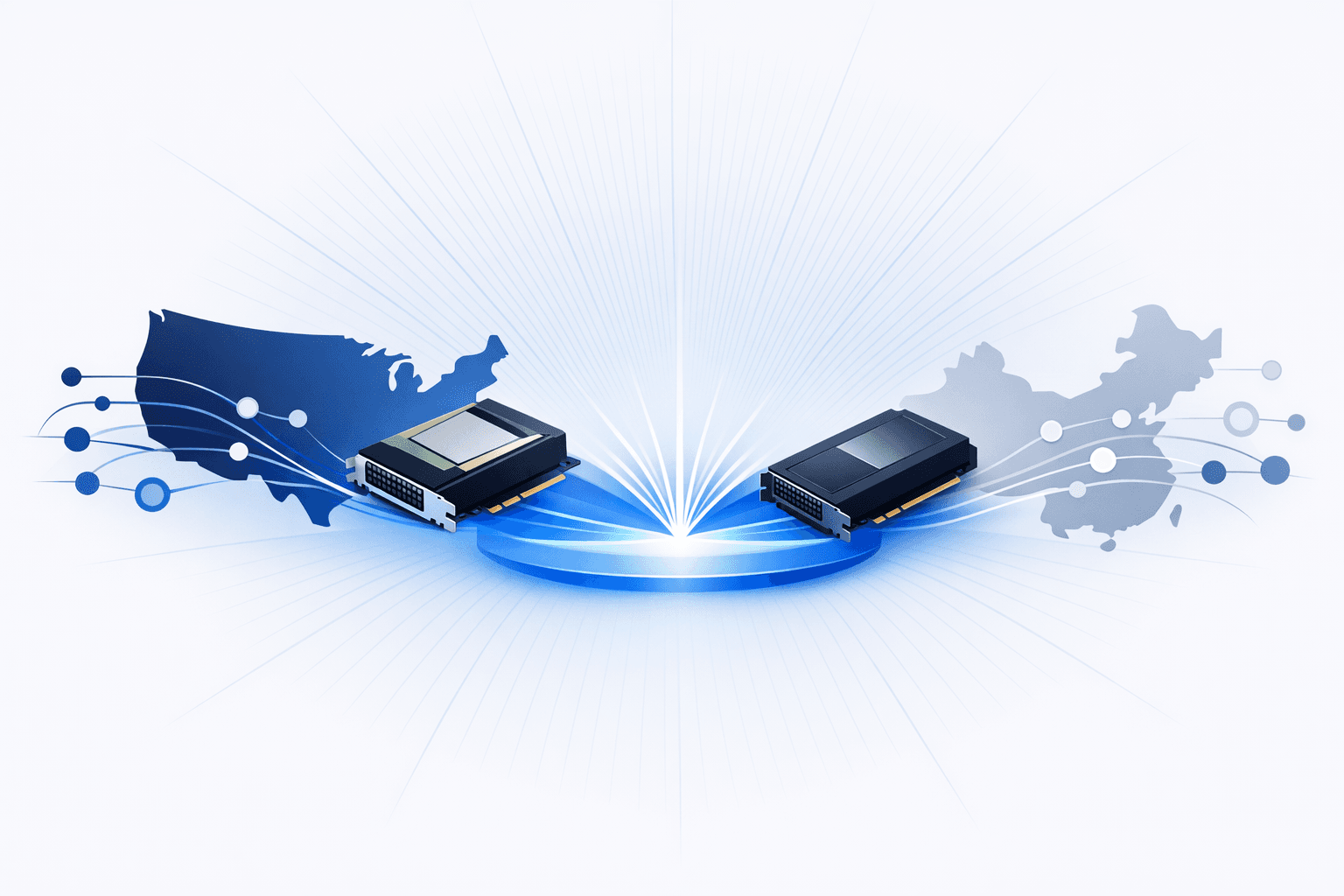
The U.S. government issued new, compliance-heavy rules governing exports of advanced AI/HPC accelerators to China and Macau, keeping a general presumption of denial while allowing limited, case-by-case licensing for narrowly defined parts such as Nvidia H200 and AMD Instinct MI325X. Eligibility is tied to technical thresholds (e.g., total processing performance and memory bandwidth caps) and to supply-side constraints intended to prevent disruption of U.S. availability, including requirements that exports not exceed shipments to U.S. entities and that products be readily available domestically—effectively constraining China-only SKUs and tightening scrutiny of re-exports and certain restricted destinations.
Separately, the Trump Administration announced a 25% tariff on exports of certain “advanced computer chips,” explicitly naming the H200 and MI325X, while carving out domestic usage (U.S.-based datacenters, R&D, startups, public sector, and non-datacenter applications) so U.S. customers are not expected to bear the fee. The policy also adds an exporter burden to demonstrate domestic demand is met before shipping abroad and signals potential further adjustments within 90 days, increasing uncertainty for vendors and customers planning non-U.S. deployments of advanced AI compute.

Get ahead of threats like this
Mallory correlates global threat intelligence with your attack surface — know if you’re exposed before adversaries strike.
How this story unfolded
2 events from the most recent confirmed update back to the earliest known activity.
Trump administration announces 25% tariff on exports of certain advanced chips
A White House press release said the Trump administration would apply a 25% tariff to exports of certain advanced computer chips, explicitly naming Nvidia's H200 and AMD's MI325X. The policy was framed as encouraging domestic use and production, exempting U.S.-based domestic use, and allowing possible revision after a Commerce Department review within 90 days.
Commerce issues new AI accelerator export rules for China and Macau
The U.S. Department of Commerce, through BIS, issued new export rules for advanced AI and HPC processors shipped to China and Macau. The framework created a narrow, case-by-case licensing path with performance thresholds, supply-protection requirements, shipment verification, and restrictions on re-exports, cloud access, and model-weight transfers.
Related entities
Vulnerabilities, threat actors, malware, products, organizations, and breaches Mallory has linked to this story.
Sources
2 references tracked. Mallory keeps watching after this page renders.
Analyzing Washington's new AI accelerator export rules - smaller manufacturers suffer while Nvidia and AMD will reap the rewards | Tom's Hardware
tomshardware.com
Open sourceTrump introduces 25% tariff on export of chips, including Nvidia H200, AMD MI325X - figure could increase in the future | Tom's Hardware
tomshardware.com
Open sourceSee the full picture, correlated to your attack surface.
Map indicators from this story to your assets and identify affected systems in minutes.
Every observed campaign, victim, and pivot linked to actors named in this story.
Malware, exploits, and IOCs connected to the activity described here.
YARA, Sigma, and Snort rules deployed to your SIEM as soon as they’re published.
Get matching new stories delivered to your team as they break — not the next morning.
Ask questions about this story and take action on the answers.
Related stories
Other stories Mallory is tracking that overlap on entities, sources, or topic labels.
U.S. Revises Export Controls to Allow Limited Sales of Nvidia H200 and AMD MI325X AI GPUs to China
The U.S. Department of Commerce’s Bureau of Industry and Security (BIS) announced revised export rules that can allow **limited, licensed exports** of certain advanced U.S.-designed AI/HPC accelerators—explicitly including **Nvidia’s H200** and **AMD’s Instinct MI325X**—to China and Macau. The policy shifts from purely performance-threshold gating toward a licensing framework that emphasizes **U.S. supply priority** and compliance assurances, including requirements that exporters demonstrate U.S. demand is met, U.S. orders are not delayed, and that PRC-bound shipments are capped relative to U.S. volumes (e.g., aggregate shipments to China not exceeding **50%** of the same product shipped into the U.S.). BIS also cited conditions such as Chinese purchasers adopting export-compliance procedures (including customer screening) and **independent third-party testing in the U.S.** to verify product performance and security. The change triggered political scrutiny in Congress, with House lawmakers warning that expanded Chinese access to advanced U.S. chips could accelerate Beijing’s AI and military ambitions, even as the administration framed the move as controlled via licensing and review. Separately, reporting indicated Beijing may be **constraining domestic purchases** of H200s to “special circumstances,” potentially limiting access largely to **university R&D labs**, reflecting China’s tension between acquiring leading-edge foreign accelerators and supporting domestic semiconductor development. Commentary from Nvidia CEO Jensen Huang about “god AI” and AI “doomer” narratives was unrelated to the export-control policy and did not add security-relevant detail to the export-rule story.
Mar 21, 2026
Proposed US Export Controls for Advanced AI Accelerators
The U.S. Department of Commerce is preparing a **sweeping, tiered export-control regime** for advanced AI accelerators from U.S. vendors such as **Nvidia** and **AMD**, expanding beyond country-specific restrictions into a broader licensing framework that could require U.S. approval for a wide range of global shipments. Reporting describes a multi-level structure tied to computing scale: smaller shipments (e.g., up to **1,000 Nvidia GB300 GPUs**) would face an expedited review, while mid-scale deployments would require **pre-authorization** before an export license application, along with compliance measures such as operational transparency, disclosure of business activities, and potential **on-site inspections** by U.S. authorities. For very large AI clusters (described as deployments on the order of **200,000 GB300 GPUs** operated by a single entity in one country), the proposed approach would elevate requirements to **government-to-government engagement** and could condition approvals on commitments to **invest in U.S. AI infrastructure** as part of national-security assurances. Separate reporting in the set covers adjacent U.S. technology-security policy issues—NIST leadership testimony on AI standards and manufacturing priorities, China’s semiconductor industry calls to consolidate efforts to build an ASML alternative under export-control pressure, and CFIUS deliberations over Tencent’s stakes in major game companies—but those items are not the same event as the AI-accelerator export-rule proposal and should be treated as distinct policy stories.
Mar 21, 2026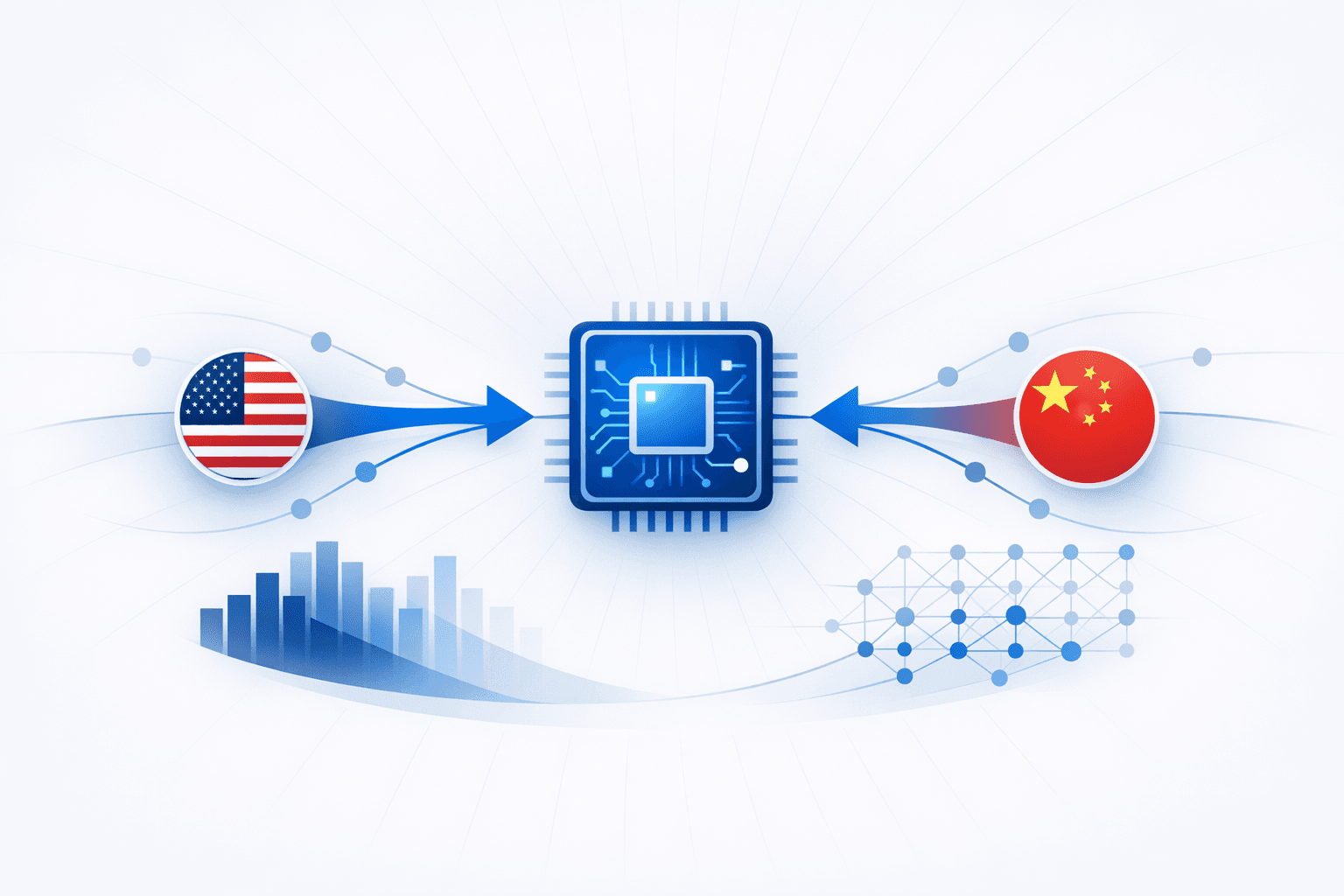
US Approval of Nvidia H200 AI Chip Exports to China Under Strict Controls
The United States government has authorized Nvidia to export its H200 AI accelerator chips to select Chinese customers, reversing previous restrictions that had barred such sales. The decision, announced by President Donald Trump, requires each chip to be routed through US territory for inspection and imposes a 25% import duty. The move is intended to maintain US technological superiority while allowing controlled access to advanced AI hardware, as the H200 is significantly more powerful than the previously permitted H20 model but still less advanced than Nvidia's latest Blackwell chips, which remain restricted. The policy shift follows concerns that strict export bans were accelerating the development of domestic Chinese alternatives, particularly from companies like Huawei, whose Ascend 910C and CloudMatrix 384 chips are approaching parity with Nvidia's offerings. Chinese regulators have responded by convening emergency meetings with major technology firms such as Alibaba, ByteDance, and Tencent to assess demand for the H200 and consider potential import limits. The Chinese government is weighing whether to permit purchases and how to structure access, with discussions reportedly focusing on restricting public sector use and requiring justification for why domestic chips cannot meet company needs. The US administration's strategy aims to keep Chinese industry reliant on American technology and secure revenue for Nvidia, which has seen its China market share plummet due to earlier restrictions. The decision is seen as a calculated effort to balance national security concerns with economic interests and the ongoing competition in AI hardware development between the US and China.
Mar 21, 2026