
Loading story…
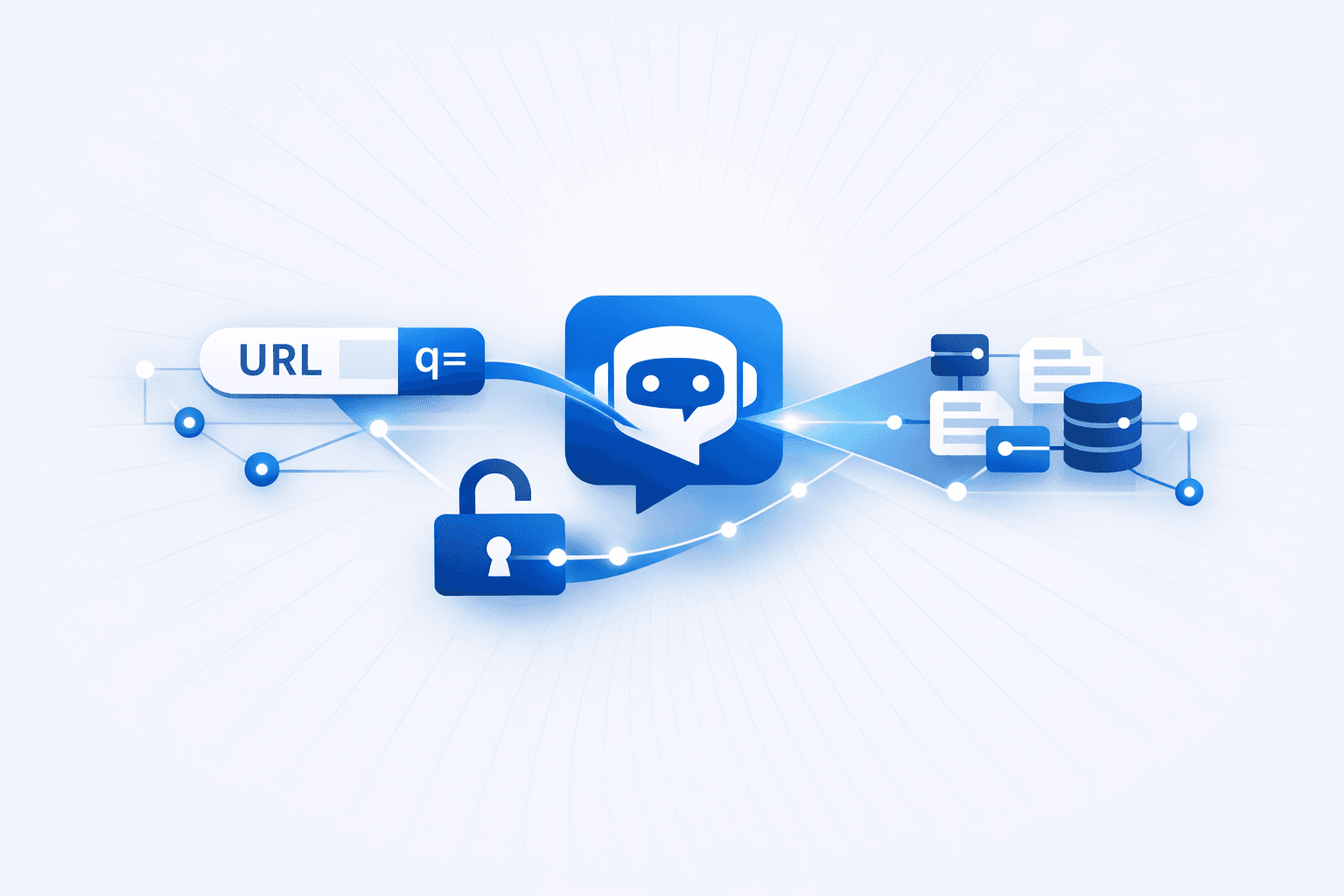
Varonis Threat Labs disclosed a prompt-injection attack chain dubbed Reprompt that enabled one-click data theft from Microsoft Copilot by abusing how Copilot accepts prompts via a URL. The technique relied on the q URL parameter to auto-populate and execute attacker-supplied instructions when a victim clicked a crafted Copilot link, requiring no plugins, connectors, or additional user-entered prompts. Researchers reported the method could expose sensitive information previously available in the Copilot session, including PII, and could continue exfiltration even after the Copilot chat window was closed.
The reported attack flow chained multiple techniques to bypass Copilot’s protections, including Parameter-to-Prompt (P2P) injection via the q parameter and a double-request bypass in which safeguards applied to an initial request but could be defeated by forcing Copilot to repeat the task, leading to disclosure on a subsequent attempt. Varonis also described chain-request exfiltration to maintain covert control of the session and progressively extract data. Reporting indicates Microsoft took action in response to the research, though the core risk highlighted is that URL-triggered prompt execution and multi-step request chaining can undermine AI assistant guardrails if not consistently enforced across requests and session states.
Mallory correlates global threat intelligence with your attack surface — know if you’re exposed before adversaries strike.
3 events from the most recent confirmed update back to the earliest known activity.
Varonis Threat Labs publicly disclosed 'Reprompt,' describing a one-click attack in which a crafted Copilot link injected prompts through the 'q' URL parameter, used repeated requests to bypass protections, and silently exfiltrated sensitive data. The researchers said the attack could persist after the chat window was closed and was difficult for client-side monitoring tools to detect.
Microsoft fixed the Copilot flaw before public disclosure, with reporting indicating the patch was included in its January 2026 security updates. Microsoft said Microsoft 365 Copilot enterprise customers were not affected.
Varonis Threat Labs privately notified Microsoft of the 'Reprompt' vulnerability, a prompt-injection technique that abused a Copilot URL parameter to bypass guardrails and enable data exfiltration. The issue affected Copilot Personal rather than Microsoft 365 Copilot enterprise users.
Vulnerabilities, threat actors, malware, products, organizations, and breaches Mallory has linked to this story.
2 references tracked. Mallory keeps watching after this page renders.
techrepublic.com
Open sourcezdnet.com
Open sourceMap indicators from this story to your assets and identify affected systems in minutes.
Every observed campaign, victim, and pivot linked to actors named in this story.
Malware, exploits, and IOCs connected to the activity described here.
YARA, Sigma, and Snort rules deployed to your SIEM as soon as they’re published.
Get matching new stories delivered to your team as they break — not the next morning.
Ask questions about this story and take action on the answers.
Other stories Mallory is tracking that overlap on entities, sources, or topic labels.

Security researchers disclosed **Reprompt**, a single-click attack against **Microsoft Copilot Personal** that enabled stealthy exfiltration of sensitive user data by abusing a legitimate Copilot URL containing a malicious `q` parameter. After a victim clicks the link (typically delivered via phishing), the crafted URL triggers **Parameter-to-Prompt (P2P) injection**, auto-executing attacker-controlled prompts within the victim’s authenticated Copilot session; researchers reported the attacker can maintain control and continue querying data even after the Copilot window/tab is closed. Microsoft has **patched** the issue. Varonis Threat Labs described an attack chain that combines three techniques to bypass Copilot’s guardrails and evade detection: **P2P injection** (prompt injection via the `q` parameter on page load), **Double-Request** (leveraging the observation that leak protections may apply to the first request but not a repeated action), and **Chain-Request** (server-driven, sequential follow-up prompts that adapt based on prior responses). Reported exposed data includes **personally identifiable information (PII)** and other Copilot-accessible context such as conversation memory and user details (e.g., location and activity/history), with the staged prompting designed to appear benign while progressively leaking information to attacker-controlled infrastructure.
Jun 29, 2026
Researchers reported that vulnerabilities in Microsoft 365 Copilot and Consumer Copilot allowed attackers to turn prompt injection into data exfiltration, memory poisoning, and persistent compromise. Microsoft assigned `CVE-2026-24299` to the main issue set and rolled out fixes across late 2025 and early 2026, while a related Microsoft Excel flaw, `CVE-2026-26144`, showed how a conventional application bug could be chained with Copilot Agent mode to silently extract spreadsheet data. In the Copilot attacks, malicious content abused HTML preview rendering to leak sensitive information through external requests, first with CSS background images and later with `@font-face`, and researchers said users could be coerced into triggering the preview during normal interaction, creating a near zero-click exfiltration path. The research also showed that Copilot’s memory features could be poisoned to add or delete stored facts and implant persistent instructions that altered future sessions, enabling a backdoor dubbed **SpAIware** that continued leaking secrets over time. Similar issues were described in consumer Copilot, including durable-memory manipulation and browser-navigation exfiltration through Edge-integrated tooling. The findings underscore a broader security shift: AI assistants can collapse trust boundaries inside host applications, raising the impact of older flaws and forcing defenders to reassess assistant permissions, restrict outbound network access from AI-enabled apps, and separately monitor AI-initiated network activity.
Jun 29, 2026
Researchers and security outlets reported multiple indirect prompt injection weaknesses affecting AI-driven browsing and assistant features, showing how hidden instructions embedded in untrusted web content can manipulate model behavior and steer users into credential theft or data exposure. Cato Networks disclosed **WebPromptTrap** in BrowserOS, where malicious webpage content abused Agent Chat Mode summarization to insert a convincing call to action and attacker-selected link; in the proof of concept, victims could be pushed into a GitHub authorization flow that exposed access tokens and repository access. Cato said the issue affected BrowserOS `0.30.0` and earlier, was identified in `0.29.0`, and was fixed in `0.32.0` after responsible disclosure. Separate reporting described similar risks in OpenAI's **ChatGPT Atlas** browser and in Microsoft **Copilot**, underscoring that the problem extends beyond a single product. LayerX said Atlas could be fed malicious instructions through web content in a "tainted memories" attack, while Axios, TechSpot, and commentary from OpenAI CISO Dane Stuckey highlighted broader security and privacy concerns around prompt injection in AI browsers. Varonis also detailed **Reprompt**, a single-click Copilot attack that could silently exfiltrate personal data. Together, the disclosures show that AI systems that summarize pages, retain context, or act on behalf of users can be turned into phishing and data-theft intermediaries unless untrusted content is strictly isolated from model instructions.
Jun 29, 2026