
Russia Uses DNS Blocking and Throttling to Disrupt WhatsApp and Telegram and Push State-Backed MAX Messenger
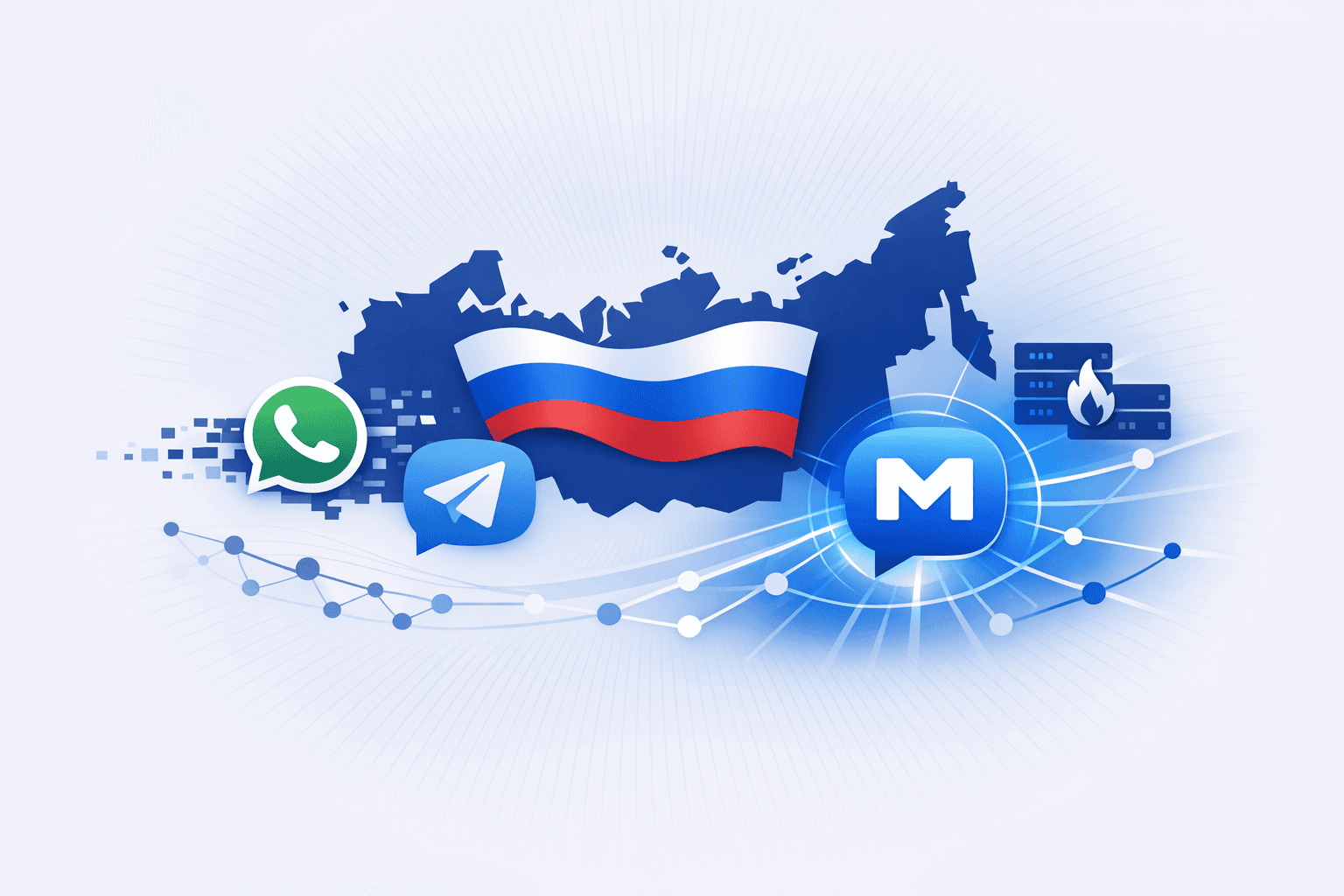
Russian authorities escalated restrictions on WhatsApp and Telegram, using network-level controls to disrupt access and steer users toward the Kremlin-promoted MAX messaging app. WhatsApp said Russia attempted to fully block the service, warning that isolating more than 100 million users from “private and secure communication” would reduce safety. Reporting indicated Roskomnadzor removed whatsapp.com and web.whatsapp.com from Russia’s National Domain Name System, effectively breaking domestic DNS resolution so the service becomes largely reachable only via VPNs or non-domestic resolvers; digital rights monitors also reported other major services being removed from the national domain registry.
Telegram also faced deliberate degradation: Roskomnadzor confirmed it “slowed down” the app, citing noncompliance with Russian law, amid widespread user-reported disruptions across multiple regions. State media reported Moscow courts opened multiple cases against Telegram in early 2026 for allegedly failing to remove content authorities label “extremist” or pornographic, with reported fines exceeding $820,000. Kremlin spokesperson Dmitry Peskov publicly tied restoration of access to compliance with Russian legislation, while Telegram founder Pavel Durov characterized the measures as authoritarian and aimed at forcing adoption of MAX, which he described as built for surveillance and censorship; Russia has a history of attempting to block Telegram, including a 2018 ban later lifted in 2020.
Get ahead of threats like this
Mallory correlates global threat intelligence with your attack surface — know if you’re exposed before adversaries strike.
How this story unfolded
12 events from the most recent confirmed update back to the earliest known activity.
Russia removes other major services from national DNS
Alongside WhatsApp, multiple major services including YouTube, Facebook, Instagram, Tor, BBC, Deutsche Welle, and The Moscow Times were reportedly removed from Russia's national domain registry, signaling a broader escalation in internet censorship.
Russia attempts a full block of WhatsApp
WhatsApp said Russia moved beyond earlier throttling and tried to fully block the platform, with the Kremlin again citing noncompliance with Russian law and urging users to switch to MAX.
Russia removes WhatsApp domains from national DNS
Roskomnadzor removed whatsapp.com and web.whatsapp.com from Russia's National Domain Name System, making the service largely accessible only through VPNs or external DNS resolvers.
Pavel Durov accuses Kremlin of pushing users to state messenger
Telegram founder Pavel Durov condemned the restrictions as authoritarian and said they were intended to drive users toward a state-controlled messaging alternative designed for surveillance and censorship.
Russia throttles Telegram over alleged legal noncompliance
After widespread user disruptions, Roskomnadzor confirmed it intentionally slowed Telegram, citing alleged violations of Russian law and content-removal requirements.
Moscow court opens seven new cases against Telegram
Since the start of 2026, a Moscow court opened seven cases against Telegram over alleged refusal to remove content labeled extremist or pornographic, with reported fines exceeding $820,000.
Russia attempts to block new WhatsApp registrations
Authorities reportedly escalated pressure on WhatsApp by trying to prevent new user registrations in Russia.
Russia requires 24-hour mobile blackout for foreign SIM entrants
A rule took effect requiring people entering Russia with foreign SIM cards to undergo a 24-hour mobile internet blackout, expanding the country's communications controls.
MAX messenger made mandatory on devices sold in Russia
The government-backed MAX messaging app, developed by VK, became mandatory on devices sold in Russia, reinforcing the Kremlin's push toward a state-backed communications platform.
Russia throttles WhatsApp voice and video calls
Russian authorities started progressively restricting WhatsApp by throttling voice and video calling functionality, marking an early stage of the later blockade effort.
Russia begins regional mobile internet cutoffs
Russia began broader internet disruption measures, including regional mobile internet shutdowns, as part of tightening control over communications.
Meta designated an extremist organization in Russia
Russia designated Meta an "extremist" organization and banned it in the country, a status later cited by the Kremlin to justify restrictions on WhatsApp.
Related entities
Vulnerabilities, threat actors, malware, products, organizations, and breaches Mallory has linked to this story.
Sources
6 references tracked. Mallory keeps watching after this page renders.
Rusland gaat in snel tempo offline nu Telegram uit de lucht is - NRC
nrc.nl
Open sourceRussia Looks to China’s WeChat, Douyin as Blueprint for Max Messaging App | Meyka
meyka.com
Open sourceRussia intensifies communication crackdown, targets WhatsApp | SC Media
scworld.com
Open sourceWhatsApp says Russia tried to fully block platform, push users to state app | The Record from Recorded Future News
therecord.media
Open sourceRussia tries to block WhatsApp, Telegram in communication blockade
bleepingcomputer.com
Open sourceMoscow moves to throttle Telegram as Kremlin pushes its own messaging app | The Record from Recorded Future News
therecord.media
Open sourceSee the full picture, correlated to your attack surface.
Map indicators from this story to your assets and identify affected systems in minutes.
Every observed campaign, victim, and pivot linked to actors named in this story.
Malware, exploits, and IOCs connected to the activity described here.
YARA, Sigma, and Snort rules deployed to your SIEM as soon as they’re published.
Get matching new stories delivered to your team as they break — not the next morning.
Ask questions about this story and take action on the answers.
Related stories
Other stories Mallory is tracking that overlap on entities, sources, or topic labels.

Russian Regulatory Crackdown on Foreign Digital Platforms
Russia's telecommunications regulator, Roskomnadzor, has blocked access to the Roblox online gaming platform, citing the platform's alleged failure to prevent the distribution of LGBT-related content, extremist materials, and facilitation of violent or illegal activities. The regulator claims that Roblox's moderation team was unable to adequately restrict such content, leading to the decision to restrict access. This move follows a pattern of increasing regulatory actions against foreign digital services in Russia, including previous bans on messaging apps like Viber and Signal for similar reasons. In parallel, Roskomnadzor has issued warnings and imposed tighter restrictions on WhatsApp, threatening a potential total ban due to the platform's alleged non-compliance with new information-sharing requirements related to terrorism and fraud investigations. Russian authorities accuse WhatsApp of being used to organize and facilitate terrorist activities and other crimes, and are encouraging users to transition to government-backed alternatives such as the MAX messaging app. These actions reflect Russia's broader efforts to control digital communications and limit the influence of foreign technology platforms within its borders.
Jun 29, 2026
Russia Blocks FaceTime and Snapchat Over Security Concerns
Russian authorities have implemented a network-level blockade on Apple's FaceTime and Snap's Snapchat platforms, citing their alleged use in coordinating terrorist attacks and facilitating criminal activities. The Russian telecommunications regulator, Roskomnadzor, stated that these services were being used to recruit perpetrators, commit fraud, and organize attacks, leading to their restriction within the country. The ban on Snapchat reportedly took effect on October 10, while the FaceTime block was announced more recently. This move is part of a broader crackdown by Russian regulators on foreign communication platforms, with previous bans on services like Viber and Signal for similar reasons. The actions reflect ongoing concerns from Russian authorities about the use of encrypted and foreign messaging platforms in activities deemed a threat to national security, and further restrictions on other platforms such as WhatsApp are reportedly under consideration.
Jun 29, 2026
Moscow Internet Blackouts and State-Approved Web Access
Russian authorities are restricting internet access in Moscow during ongoing mobile network disruptions by allowing connectivity only to a **government-approved whitelist** of domestic websites and services. Reporting indicates the system keeps selected Russian platforms—such as government sites, telecom services, marketplaces, and transport or delivery apps—available while broader internet access is blocked, reportedly using **deep packet inspection (DPI)** and infrastructure controls that require traffic to stay within Russia and prevent users from masking IP addresses. Officials have framed the outages and restrictions as protective measures against **Ukrainian drone attacks**, while similar controls are reportedly being prepared or used in other Russian cities including St. Petersburg. The disruptions are also producing visible social and economic effects in Moscow, where residents and businesses are struggling with failed QR-code payments, degraded app-based services, and loss of normal mobile connectivity. One account describes a broader regression to offline workarounds, including increased demand for **walkie-talkies, pagers, and paper maps**, as GPS-dependent and internet-based services become unreliable. A separate report on **Kazakhstan's** proposed social media monitoring regime concerns a different country and policy process and does not describe the same Moscow outage and whitelist event.
Jun 29, 2026