
French FICOBA Bank Account Registry Accessed Using Stolen Government Credentials
French authorities confirmed unauthorized access to FICOBA, the national registry of bank accounts, after an attacker used stolen credentials belonging to a government official to view records tied to roughly 1.2 million accounts. Exposed data reportedly included account numbers and account-holder identity details (names, addresses, and in some cases tax identification numbers), while balances and transaction histories were not accessed; officials said the access was detected and blocked quickly and that affected individuals would be notified. A criminal complaint was filed and the incident was reported to CNIL (France’s data protection authority).
Reporting also indicated the government described the incident as involving data “stolen” from the repository, though other accounts emphasized that access was interrupted before exfiltration could occur, leaving the precise extent of data removal unclear. The incident highlights the risk of credential compromise for privileged government access to sensitive financial registries and the downstream exposure of identity-linked banking metadata that can enable targeted fraud and social engineering even without transaction data.

Get ahead of threats like this
Mallory correlates global threat intelligence with your attack surface — know if you’re exposed before adversaries strike.
How this story unfolded
4 events from the most recent confirmed update back to the earliest known activity.
Authorities file complaint, notify CNIL, and prepare victim notifications
Following the disclosure, French authorities said they had filed a criminal complaint and informed CNIL, France’s data protection authority. The government also said affected account holders would be notified about the breach.
French government discloses FICOBA breach affecting 1.2 million accounts
On or before February 19, 2026, the French government publicly reported that an unauthorized third party had accessed FICOBA and stolen data associated with roughly 1.2 million bank accounts. The compromised information included account numbers, names, addresses, and in some cases tax identification numbers.
French authorities block access after detecting the intrusion
After the unauthorized access was discovered, French authorities immediately revoked the attacker’s access to the system. Officials said account balances and transaction data were not accessed, and stated that further exfiltration was prevented once the breach was detected.
Attacker uses stolen credentials to access FICOBA in January
In January 2026, an unknown attacker used stolen credentials belonging to a French government official to access FICOBA, France’s national registry of bank accounts. The intrusion exposed personal and banking-related data tied to about 1.2 million accounts.
Related entities
Vulnerabilities, threat actors, malware, products, organizations, and breaches Mallory has linked to this story.
Sources
3 references tracked. Mallory keeps watching after this page renders.
Attacker gets into France's DB listing all bank accounts • The Register
go.theregister.com
Open sourceHacker accesses data from 1.2 million French bank accounts using stolen credentials | SC Media
scworld.com
Open sourceteiss - News - Hacker stole data on 1.2m bank accounts from French government accounts repository
teiss.co.uk
Open sourceSee the full picture, correlated to your attack surface.
Map indicators from this story to your assets and identify affected systems in minutes.
Every observed campaign, victim, and pivot linked to actors named in this story.
Malware, exploits, and IOCs connected to the activity described here.
YARA, Sigma, and Snort rules deployed to your SIEM as soon as they’re published.
Get matching new stories delivered to your team as they break — not the next morning.
Ask questions about this story and take action on the answers.
Related stories
Other stories Mallory is tracking that overlap on entities, sources, or topic labels.
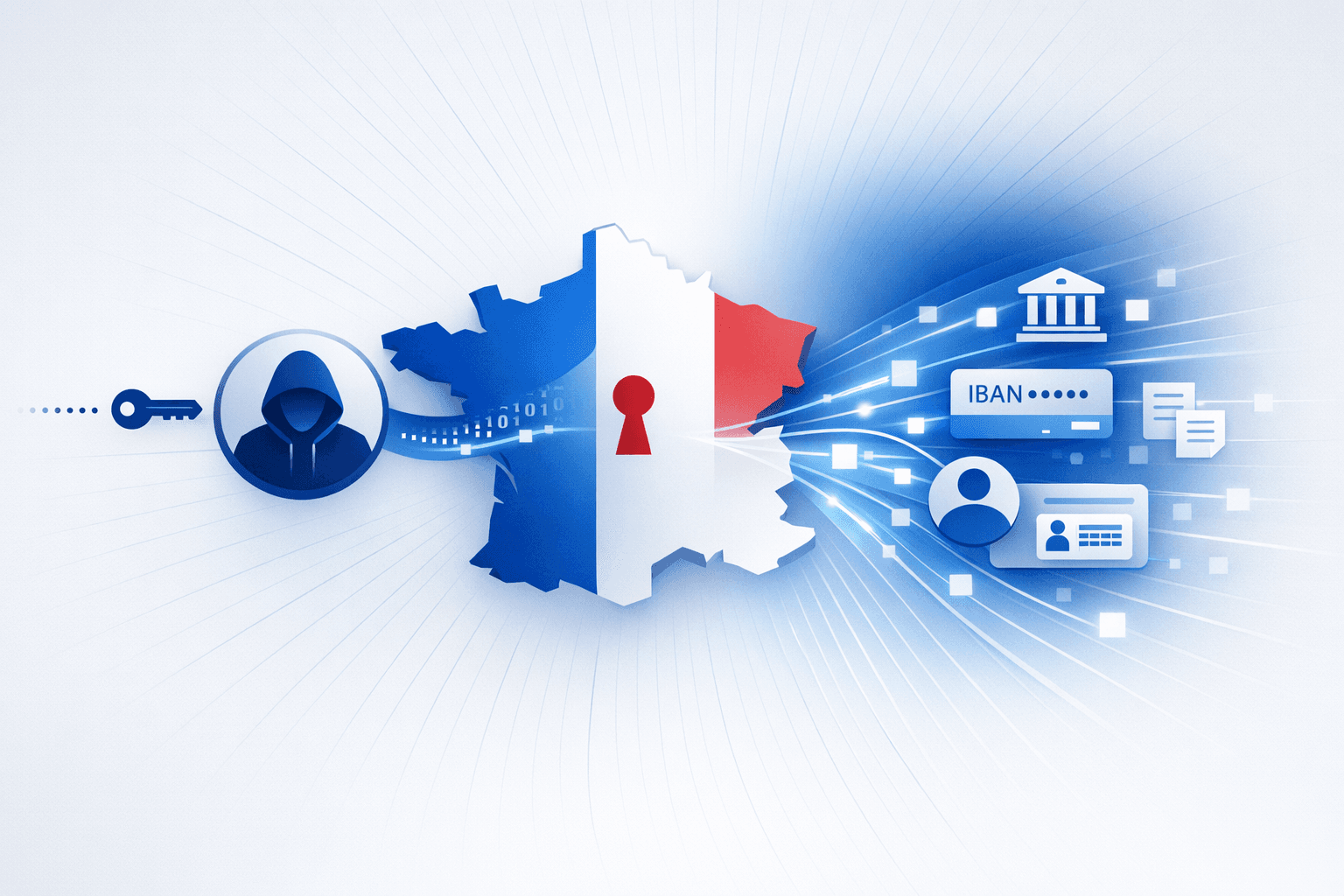
Unauthorized Access to France’s FICOBA Bank Account Registry Exposes 1.2 Million Accounts
France’s Ministry of the Economy and Finance confirmed that an attacker **accessed and consulted data tied to ~1.2 million French bank accounts** by using **stolen login credentials** belonging to an authorized government user of the national bank account registry (*FICOBA*). The intrusion began in **late January 2026** and exposed account-linked personal data including **IBANs**, account holder **names**, **addresses**, and in some cases **tax identification numbers** (DGFiP-issued). Authorities stated the access did **not** enable viewing balances or initiating transactions. After detection, the ministry reported it **blocked the attacker**, notified France’s data protection authority (**CNIL**), and **filed a criminal complaint**; impacted individuals are expected to be contacted directly, and **banks were alerted** to advise customers to remain vigilant. Reporting noted the incident follows other recent cyber disruptions affecting French public services (including attacks impacting **La Poste/La Banque Postale** and the **Interior Ministry**), though no motive or attribution for the FICOBA access has been publicly confirmed.
Apr 7, 2026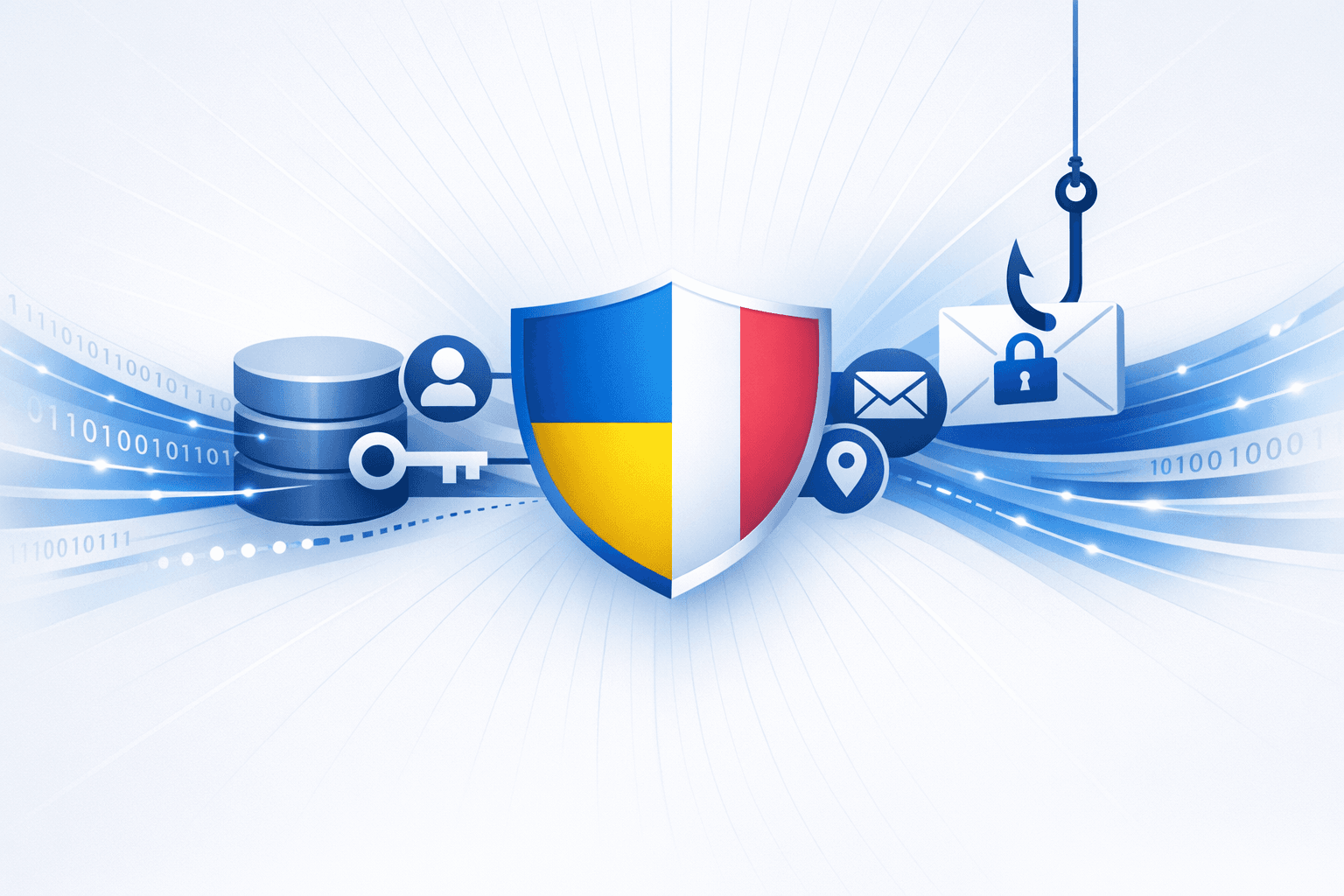
Data exposures tied to third-party access and credential misuse in Ukraine and France
Ukraine’s National Bank (NBU) took its **collectible coin/numismatic online store** offline after a cyberattack against a supporting **contractor** potentially exposed customer registration data (names, phone numbers, emails, and delivery addresses). The NBU said **core banking systems were not affected** and **no payment card or banking data** was compromised, but warned the exposed PII could be leveraged for **phishing** and other follow-on fraud; the incident was described as consistent with a **supply-chain** intrusion path. In France, authorities disclosed illegal access to a portion of the **National Bank Accounts File (FICOBA)**—a government database used for tax, customs, and law-enforcement purposes—after an attacker **impersonated a civil servant** and used valid credentials to query data. Officials said up to **1.2 million accounts** may have been impacted, with exposed fields potentially including account numbers, names, addresses, and in some cases tax identifiers; **DGFiP**, supported by **ANSSI**, is investigating and notifying affected individuals while banks were alerted to heighten fraud/phishing monitoring. Separately, **Safran Group** denied being cyberattacked, stating that a leaked dataset containing “non-strategic” order/customer details was **inadvertently exposed via a third-party provider**, with external analysis suggesting the compromise occurred elsewhere in the supply chain rather than within Safran’s own systems.
Mar 21, 2026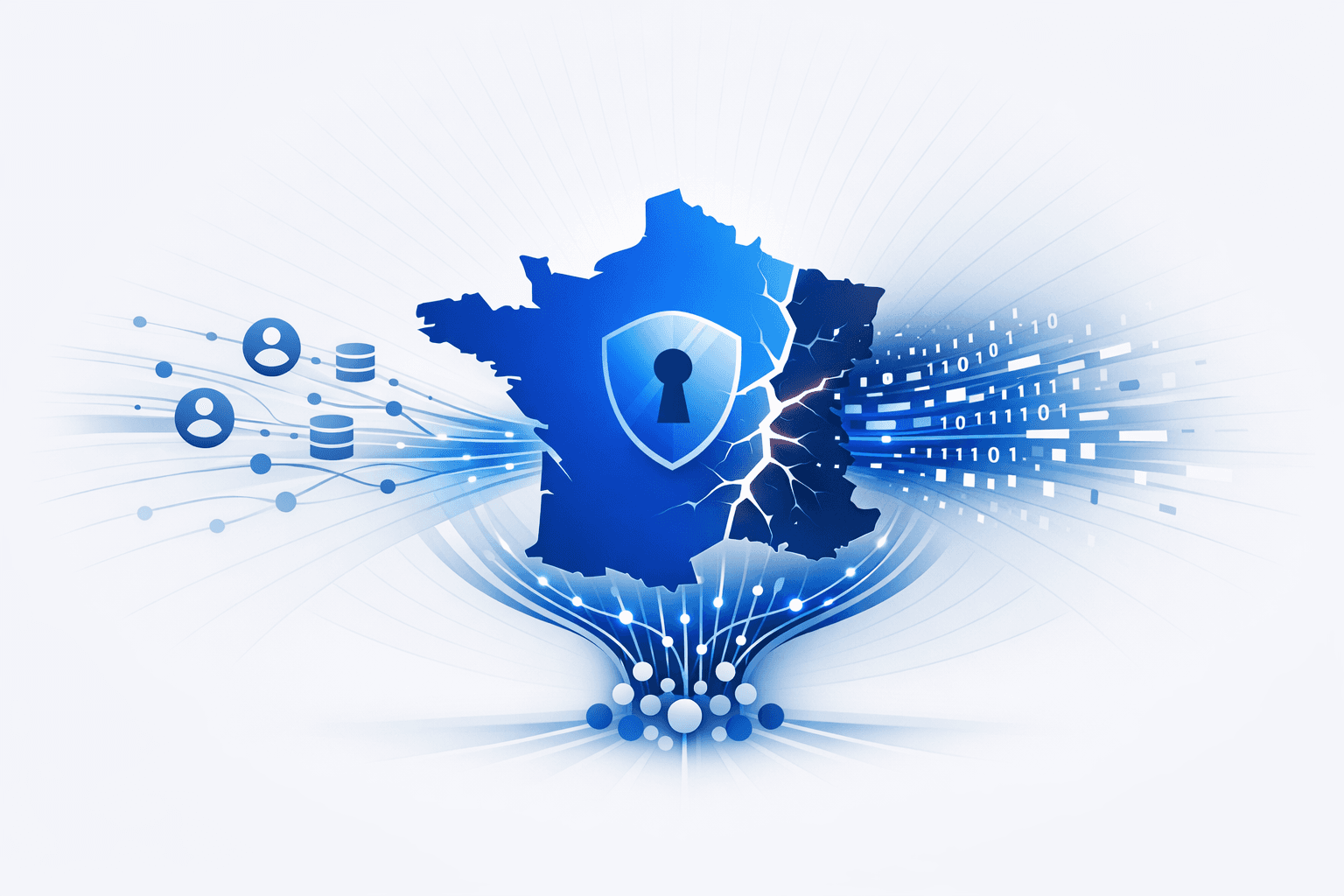
France Titres Breach Exposed Up to 19 Million Identity Records
France Titres, the French agency formerly known as ANTS and responsible for identity and registration documents, confirmed a breach of its `ants.gouv.fr` portal after threat actor **breach3d** advertised a trove of stolen records for sale on cybercrime forums. The agency said the compromised data may include login IDs, full names, email addresses, dates and places of birth, account identifiers, and in some cases postal addresses and phone numbers from both individual and professional accounts. Other reporting on the sale listings said the dataset could contain 18 million to 19 million records, including fields indicating government-verified identities, raising the risk of phishing, social engineering, and identity fraud if the claims are fully accurate. French authorities said unusual activity was identified in mid-April and launched parallel technical and judicial investigations involving **ANSSI**, **CNIL**, the Paris Public Prosecutor, and anti-cybercrime investigators. Prosecutors later announced the arrest of a 15-year-old suspect in connection with the case after records linked to the agency were allegedly offered for sale online, and said the inquiry covers unauthorized access, persistence, and extraction of personal data from a state-operated system. France Titres has notified affected individuals and said the stolen information does not provide direct access to user accounts or the portal itself, while warning citizens to remain alert for follow-on scams and impersonation attempts.
May 25, 2026