
Trump Administration Pushes Policies Favoring Cross-Border Data Flows and Expanded Surveillance Authorities
Reporting described a Trump administration directive ordering U.S. diplomats to lobby against foreign “data sovereignty” and data-localization laws that would constrain how U.S. technology companies handle non-U.S. citizens’ data. The cable argues such regulations would hinder AI and cloud services, disrupt global data flows, raise costs, and potentially increase cybersecurity risk, while also warning that localization could expand state control in ways that undermine civil liberties and enable censorship; diplomats were also instructed to track sovereignty proposals and promote mechanisms such as the Global Cross-Border Privacy Rules Forum to support “trusted” international data transfers.
Separately, the administration was reported to be seeking a clean reauthorization of FISA Section 702, preserving the ability to compel providers to furnish communications of foreign targets abroad without a warrant and without adding a warrant requirement for queries involving U.S.-person data held in 702 databases. The debate is occurring amid documented compliance and civil-liberties concerns, including acknowledged improper FBI queries (e.g., related to January 6 and 2020 protest activity). Commentary on AI and democracy provided broader context on how AI-driven “arms races” and industry lobbying can reshape governance and citizen-state relationships, but it did not add incident-level cybersecurity details tied to the diplomatic cable or Section 702 reauthorization effort.

Get ahead of threats like this
Mallory correlates global threat intelligence with your attack surface — know if you’re exposed before adversaries strike.
How this story unfolded
4 events from the most recent confirmed update back to the earliest known activity.
State Department orders diplomats to oppose data sovereignty laws
By February 26, 2026, the Trump administration had directed U.S. diplomats to lobby against foreign data-sovereignty and data-localization measures through an internal cable signed by Secretary of State Marco Rubio. The directive told diplomats to counter such proposals, track emerging initiatives, and promote the Global Cross-Border Privacy Rules Forum as an alternative for cross-border data transfers.
White House seeks clean reauthorization of Section 702
By February 25, 2026, the Trump administration was seeking a 'clean' extension of FISA Section 702, which was set to lapse in April. Senate Intelligence Committee Chairman Tom Cotton said President Trump had requested a simple renewal, setting up a clash with lawmakers seeking additional reforms such as warrant requirements for U.S.-person queries.
Trump administration holds meeting on Section 702 stance
Earlier in February 2026, White House officials reportedly met to decide the administration's position on the upcoming expiration of Section 702. The discussion preceded a public push for a straightforward extension of the surveillance authority.
Biden signs two-year Section 702 renewal with reforms
In April 2024, then-President Joe Biden signed a two-year reauthorization of FISA Section 702 after debate over FBI misuse and proposed privacy reforms. The renewal followed controversy over improper FBI queries, including searches tied to the January 6, 2021 Capitol riot and 2020 racial justice protests.
Related entities
Vulnerabilities, threat actors, malware, products, organizations, and breaches Mallory has linked to this story.
Sources
2 references tracked. Mallory keeps watching after this page renders.
See the full picture, correlated to your attack surface.
Map indicators from this story to your assets and identify affected systems in minutes.
Every observed campaign, victim, and pivot linked to actors named in this story.
Malware, exploits, and IOCs connected to the activity described here.
YARA, Sigma, and Snort rules deployed to your SIEM as soon as they’re published.
Get matching new stories delivered to your team as they break — not the next morning.
Ask questions about this story and take action on the answers.
Related stories
Other stories Mallory is tracking that overlap on entities, sources, or topic labels.
Trump Administration Expands Intelligence Access to Domestic Law Enforcement Data
The **Trump administration** is moving to loosen long-standing restrictions on sharing domestic law enforcement information with the **CIA and other intelligence agencies**, potentially opening access to databases containing hundreds of millions of records, including FBI case files, banking records, and investigative material involving law-abiding Americans. Officials said the changes are being justified as part of efforts to target drug cartels and other transnational criminal groups that the administration has designated as terrorists, but the process has reportedly unfolded with **little transparency, limited legal debate, and minimal notice to Congress**, raising significant civil-liberties concerns. The broader policy debate over U.S. surveillance powers is reflected in parallel criticism of **Section 702** reauthorization efforts, with privacy advocates arguing that existing authorities already enable excessive collection and weak safeguards for Americans' data. Proposed reforms in the **SAFE Act** are being presented as an attempt to impose stronger limits on surveillance and intelligence access, underscoring concern that the government is expanding intelligence collection and information-sharing authorities faster than oversight and privacy protections are being strengthened.
Mar 21, 2026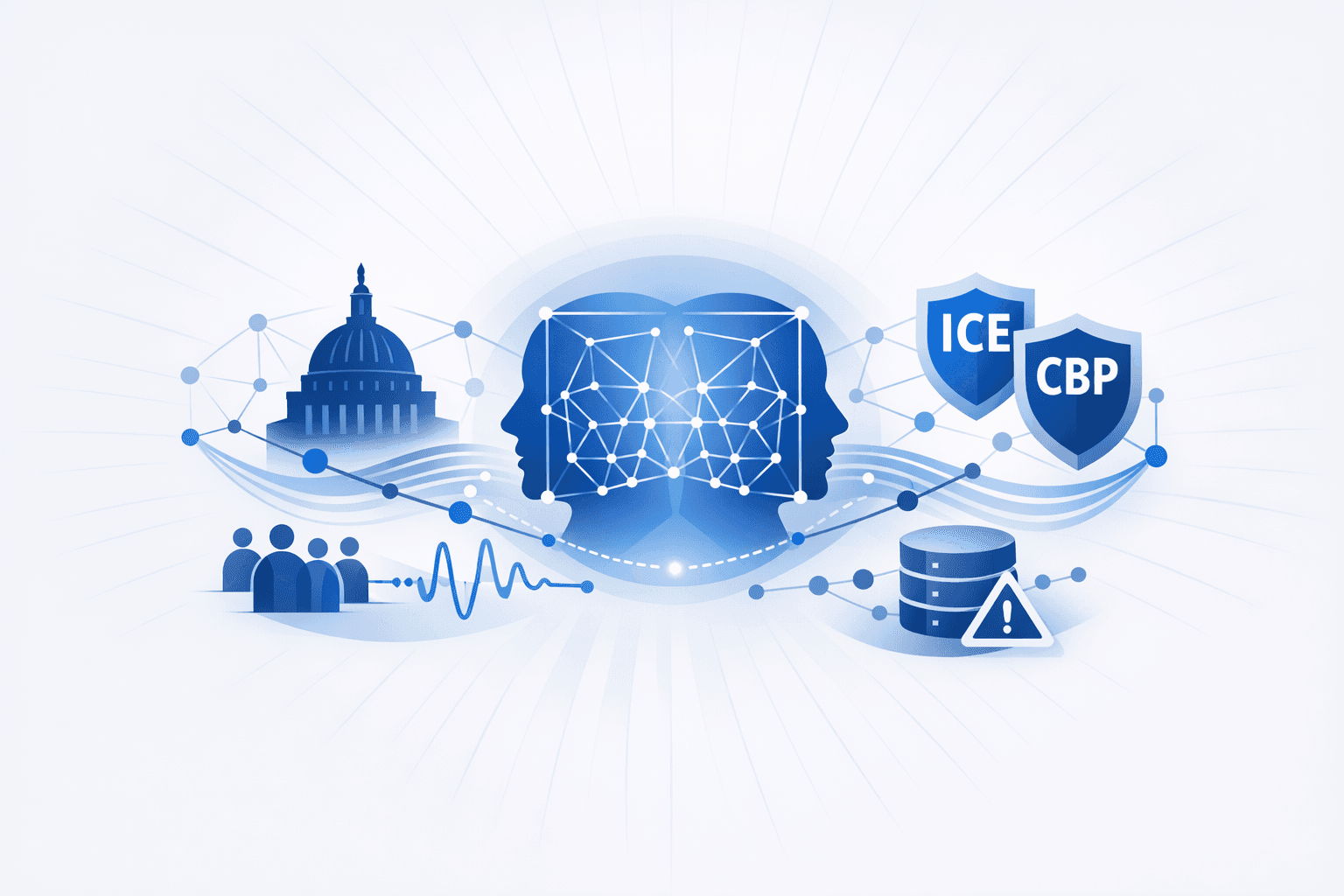
Congressional and civil-liberties backlash over ICE/CBP facial recognition and broader domestic surveillance authorities
US lawmakers and civil-liberties advocates are escalating scrutiny of **ICE** and **CBP** use of facial recognition amid reports that immigration agents have used face-scanning tools on people observing or protesting enforcement activity. Proposed legislation dubbed the **“ICE Out of Our Faces Act”** would seek to bar ICE/CBP facial recognition use, alongside related demands to limit tracking of First Amendment activity and questions about whether ICE maintains a “domestic terrorists” database tied to immigration protests. Separately, records reviewed by *WIRED* indicate DHS’s *Mobile Fortify* facial-recognition app—rolled out in 2025 to “determine or verify” identities during operations—cannot reliably **verify** identity and is intended at best to generate investigative leads; the reporting also describes DHS approving the tool after weakening centralized privacy reviews and removing department-wide limits on facial recognition. In parallel, Congress is debating the renewal of **FISA Section 702**, with lawmakers raising concerns that domestic surveillance authorities could be applied more broadly, including in support of immigration-related enforcement framed as a national security issue. Nextgov reports that transparency data shows intelligence agencies increased 702 searches in 2024 using identifiers linked to known or suspected Americans while pursuing foreign cyber and terrorism threats, even as the FBI reduced its own direct U.S.-person queries after new safeguards. A separate Nextgov item on an AI moratorium and sector-specific AI regulation is policy-focused and not directly tied to the ICE/CBP facial recognition deployments or Section 702 reauthorization debate described in the other reporting.
Mar 21, 2026
US Intelligence and Homeland Security Oversight Scrutiny Over Surveillance, Biometrics, and Handling of Classified Intelligence
Senior US officials and lawmakers are escalating oversight and policy debates around **surveillance authorities and intelligence handling**. The White House confirmed it will convene a high-level meeting with senior national security leaders and key members of Congress to discuss reauthorizing **FISA Section 702**, which is set to lapse without congressional action; the authority enables warrantless targeting of foreigners’ communications but can incidentally collect Americans’ communications, fueling renewed civil-liberties and warrant-requirement disputes. Separately, Director of National Intelligence **Tulsi Gabbard** is facing scrutiny on multiple fronts, including a **whistleblower complaint** alleging unusual restrictions on dissemination of highly classified NSA-derived intelligence and claims she directed the NSA not to publish a report and instead route details to her office; Gabbard’s office denies wrongdoing and says her actions were lawful, while the underlying complaint remains highly classified. Parallel oversight pressure is also building around **domestic-facing security and data practices**. The DHS Office of Inspector General launched an audit into how DHS components—initially focusing on **ICE** and the **Office of Biometric Identity Management**—collect, manage, share, and secure **PII and biometric data** used in immigration enforcement, following lawmakers’ concerns about facial recognition and license-plate data collection. In a separate but related governance controversy, Gabbard’s expanded involvement in **election security**—including participation around an FBI raid of a local elections office and actions involving voting systems that her team said had cybersecurity vulnerabilities—has raised questions about mandate boundaries between foreign-interference missions and domestic election administration. In contrast, the CIA’s announcement of a new acquisition framework to speed technology adoption is primarily an internal modernization/procurement change and does not materially advance the surveillance/oversight storyline beyond general national-security context.
Mar 21, 2026