
2026 Cybersecurity Outlook Focused on Agentic AI, Machine Identities, and Compliance Pressure
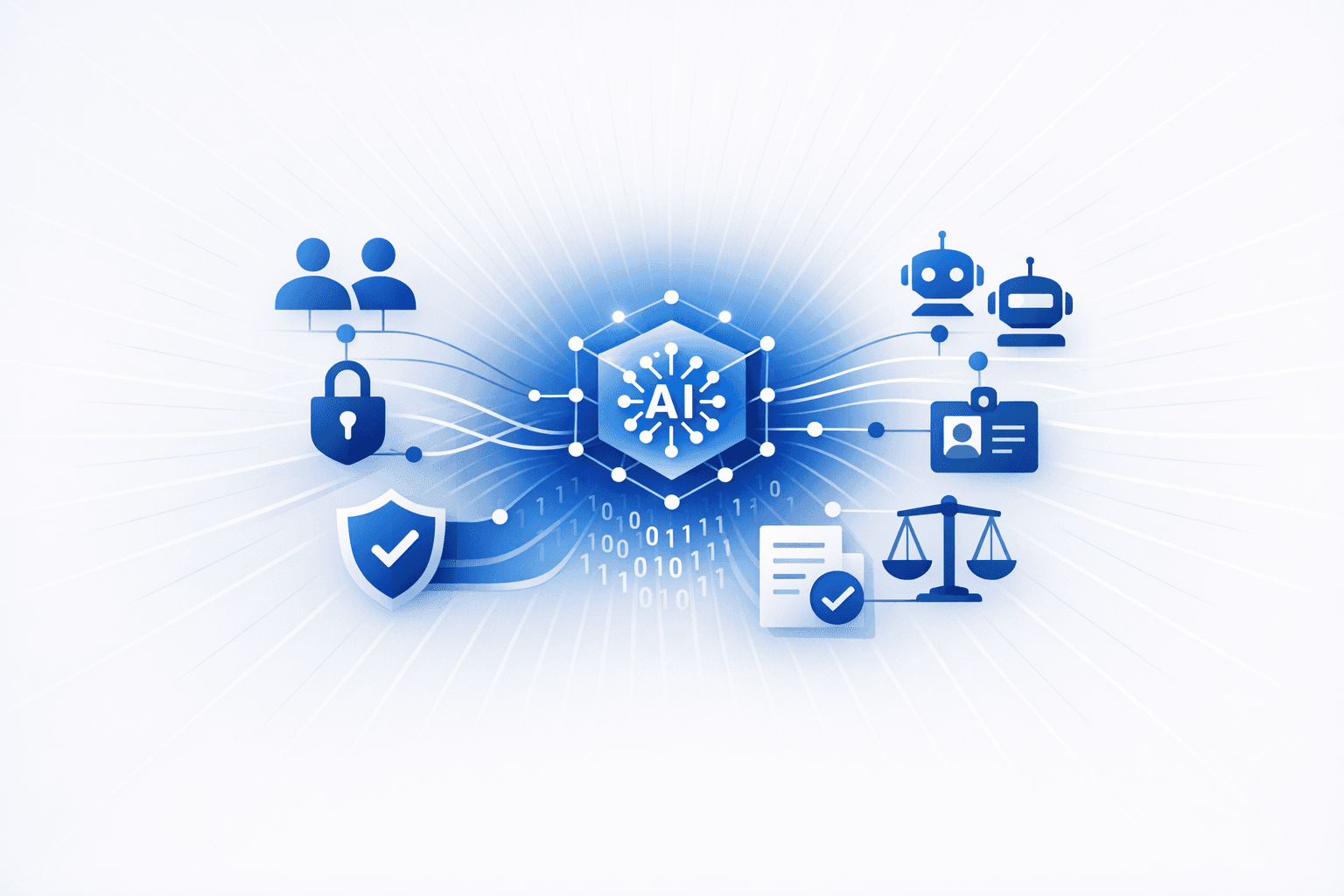
Multiple 2026 outlook pieces warn that rapid adoption of agentic AI and expanding non-human identities (NHIs) will increase breach risk by creating overprivileged machine identities and automation that can act with insufficient governance. Security leaders cited risks including “agency abuse,” runaway automation, and deepfake-enabled erosion of trust signals, with the expectation that AI governance, identity controls, and accountability will become board-level priorities as organizations operationalize autonomous systems in production environments.
Separately, enterprise leaders anticipate continued strain from talent shortages and the need to justify AI/automation ROI while balancing cybersecurity and cloud priorities, alongside persistent complexity in privacy and cybersecurity compliance as regulations evolve and AI expands data-sharing and third-party risk. One roundup item points to ongoing regional threat activity (e.g., MuddyWater spear-phishing delivering a Rust-based RAT) but does not materially connect to the agentic-AI/NHI theme, while a conference list is primarily an events calendar rather than substantive threat or vulnerability reporting.
Get ahead of threats like this
Mallory correlates global threat intelligence with your attack surface — know if you’re exposed before adversaries strike.
How this story unfolded
9 events from the most recent confirmed update back to the earliest known activity.
CIRCIA federal implementation is set for May 2026
Dark Reading identifies May 2026 as the expected implementation point for federal CIRCIA requirements. The upcoming deadline is presented as a major compliance milestone organizations need to prepare for in 2026.
Analysts warn 2026 compliance burden will intensify
January 2026 reporting says organizations face a difficult compliance year due to fragmented state privacy, AI, and cybersecurity laws, including California CCPA obligations, state AI-in-HR rules, and age-verification requirements. The coverage advises prioritizing the highest-risk obligations because universal compliance across jurisdictions is increasingly unrealistic.
Experts forecast 2026 AI-driven identity and deepfake security risks
Articles published in January 2026 from CIO, SC Media, and Security Boulevard describe a growing consensus that 2026 will bring heightened risk from agentic AI, non-human identity sprawl, overprivileged machine accounts, and AI-enabled social engineering such as deepfakes and voice cloning. The pieces emphasize stronger identity governance, least-privilege controls, behavior-based detection, and verification measures as necessary responses.
HHS proposes amendments to the HIPAA Security Rule
Dark Reading says the US Department of Health and Human Services proposed amendments to the HIPAA Security Rule in 2025. The proposal is framed as an important healthcare-sector compliance development ahead of 2026.
FTC updates COPPA requirements
The Federal Trade Commission updated COPPA in 2025, according to Dark Reading. The change is cited as part of broader regulatory activity increasing privacy and cybersecurity compliance complexity for organizations.
DOJ announces new Data Security Program compliance activity
The Dark Reading article highlights a 2025 Department of Justice compliance announcement tied to its new Data Security Program. It is presented as a significant regulatory development signaling a more active US data-security enforcement environment.
Louisiana app-store age law is struck down
Dark Reading reports that a Louisiana app-store age law was struck down in court. The ruling is cited as another recent judicial action affecting state efforts to impose app age-verification obligations.
Texas app-store age law is temporarily blocked
A Texas court temporarily blocked the state's App Store Accountability Act, according to the Dark Reading reference. The court action is presented as one of several recent legal developments shaping compliance expectations around age-verification requirements.
Utah enacts app-store age-verification law
Dark Reading notes that Utah enacted an app age-verification law in mid-2025, part of a growing state-level push to regulate app-store age checks. The law is cited as an early marker of the fragmented state privacy and online-safety landscape organizations must track.
Related entities
Vulnerabilities, threat actors, malware, products, organizations, and breaches Mallory has linked to this story.
Sources
4 references tracked. Mallory keeps watching after this page renders.
2026 AI reckoning: Agent breaches, NHI sprawl, deepfakes | SC Media
scworld.com
Open source7 challenges IT leaders will face in 2026
cio.com
Open sourceNavigating Privacy and Cybersecurity Laws in 2026 Will Prove Difficult
darkreading.com
Open sourceCan Agentic AI meet future cybersecurity demands?
securityboulevard.com
Open sourceSee the full picture, correlated to your attack surface.
Map indicators from this story to your assets and identify affected systems in minutes.
Every observed campaign, victim, and pivot linked to actors named in this story.
Malware, exploits, and IOCs connected to the activity described here.
YARA, Sigma, and Snort rules deployed to your SIEM as soon as they’re published.
Get matching new stories delivered to your team as they break — not the next morning.
Ask questions about this story and take action on the answers.
Related stories
Other stories Mallory is tracking that overlap on entities, sources, or topic labels.
CISO and Security Leadership Outlook for 2026: AI-Driven Threats, Identity-Centric Defense, and Workforce Strain
Security leaders are signaling that **2026 risk will be dominated by faster, cheaper, and more credible attacks enabled by AI and automation**, with adversaries increasingly targeting **identity and cloud access** rather than endpoints. Commentary highlighted growing exposure from “internet monoculture” concentration in major cloud/CDN/productivity providers, rising **deepfake/voice-cloning and synthetic-identity** abuse that erodes trust in authentication, and longer-term **“collect now, decrypt later”** concerns tied to quantum risk. In parallel, organizations are being pushed toward operating models emphasizing **speed, automation, and continuous identity verification**, while also updating resiliency playbooks to explicitly account for AI behavior and accountability. Operationally, workforce data indicates **U.S. cybersecurity leaders average ~10.8 hours of overtime per week**, with reported burnout and expanding responsibilities as AI governance and business-risk communication become more central to the role. Several items in the set are not incident-driven: one is a conference write-up (ThreatLocker’s *Zero Trust World 2026*) and others are strategy/career pieces (secure-by-design/SDLC applied to governance and human error; CSO role definition). One reference points to a distinct law-enforcement action—**a 14-country operation that dismantled the LeakBase cybercrime marketplace**—which is a separate event from the 2026 leadership/outlook theme, and another appears to be a vendor/platform expansion blurb rather than a specific threat or disclosure.
Apr 27, 2026
Executive Concern Grows Over AI-Enabled Identity and Sector Threats in 2026
Security leaders are increasingly prioritizing **AI-enabled threats**, particularly those targeting identity systems, while acknowledging gaps in readiness. The Identity Underground’s *2026 Annual Pulse* survey reported that **54% of executives** rank AI-enhanced identity threats as their top concern for 2026, but only **3%** say they are “very prepared.” Respondents cited **legacy infrastructure** and manual processes as key blockers, with **82%** saying legacy systems actively create identity risk; **NTLM** was highlighted as a common weakness (61%) that can enable lateral movement, alongside rapid growth in **non-human identities** (e.g., API keys, service accounts) that many organizations cannot fully inventory. In the health sector, Health-ISAC’s *2026 Global Health Sector Threat Landscape* similarly elevated **AI-driven attacks** as the leading concern for 2026, alongside **supply chain vulnerabilities**, drawing on sector reporting such as its ransomware events database and indicator-sharing/alerting programs. Separately, CSO Online’s “CISO predictions for 2026” package is broader, aggregating multiple forward-looking items (including AI and cybercrime themes) rather than detailing the same identity-focused survey findings or the Health-ISAC health-sector report.
Mar 21, 2026
Predictions and guidance on AI-driven cyber risk and emerging threats in 2026
Commentary from *Dark Reading* and the *Resilient Cyber* newsletter highlights **agentic AI** and broader **AI-enabled social engineering (including deepfakes)** as growing enterprise attack-surface concerns heading into 2026, alongside continued emphasis on fundamentals like vulnerability management. A *Dark Reading* readership poll framed agentic AI as the most likely major security trend for 2026, reflecting expectations that increasingly autonomous systems will become attractive targets and/or tools for cybercrime. A separate *Dark Reading* “Reporters’ Notebook” discussion urged security leaders to prioritize practical steps for 2026, including improving resilience against **phishing/social engineering**, accelerating **patching**, and preparing for **quantum-era cryptography** transitions. The *Resilient Cyber* newsletter echoed the “inflection point” theme for operationalizing AI security, citing model-provider discussions (e.g., OpenAI’s Cyber Preparedness Framework and Anthropic’s reporting on abuse) and arguing that defenders will need to adopt AI capabilities to keep pace with attackers, while acknowledging that guardrails can be bypassed and that AI-driven fraud (e.g., deepfake phishing) is already a near-term risk.
Mar 21, 2026