
Loading story…
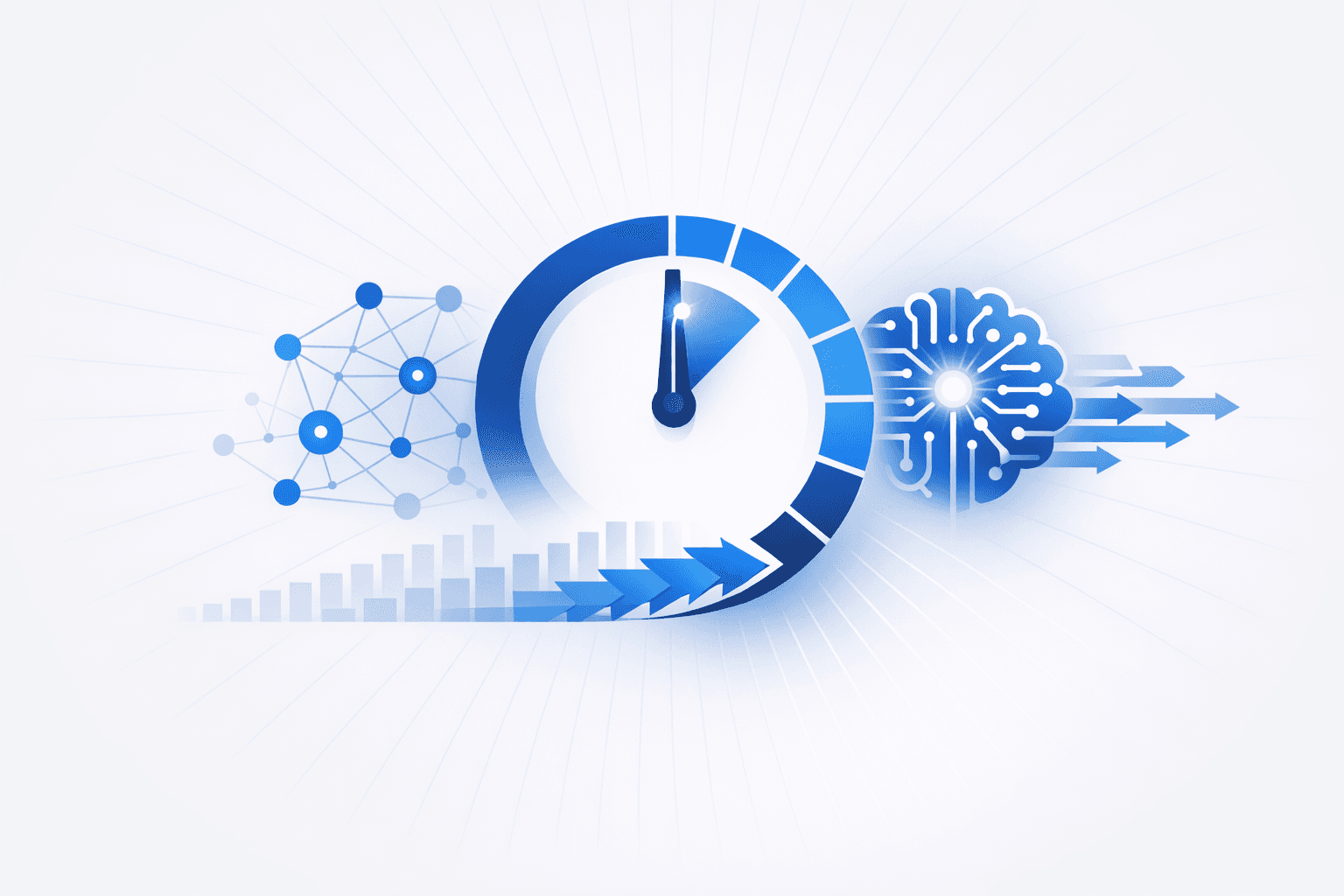
Security leaders are warning that AI is accelerating zero-day discovery and exploit development, compressing the time between vulnerability introduction, disclosure, and real-world abuse. A featured discussion of the "Zero Day Clock" argues that attackers benefit from a structural advantage because offensive validation is fast and binary, while defenders face slower, costlier verification and patching cycles; the result is a widening gap when organizations still operate on remediation timelines measured in weeks while active exploitation can begin in days. The reporting frames this as a material risk to enterprise resilience rather than a theoretical concern, especially as AI lowers the skill barrier for finding flaws in widely used software.
One relevant reference also examines how AI-enabled cyber operations are becoming more autonomous, adaptive, and scalable, including target selection, phishing, and tactical decision-making without constant human direction. While focused on state espionage and policy implications rather than vulnerability research specifically, it supports the same broader development: AI is changing the speed and economics of offensive cyber activity. The remaining references are not about this event or topic; they cover detection strategy metrics, a personal newsletter essay, commercial spyware policy, software liability commentary, and a detection engineering newsletter, making them separate issues rather than part of the same story.
Mallory correlates global threat intelligence with your attack surface — know if you’re exposed before adversaries strike.
3 events from the most recent confirmed update back to the earliest known activity.
A policy article argued that AI is shifting state cyber espionage toward adaptive, partially autonomous operations that can select targets, generate phishing lures, and make tactical intrusion decisions without real-time human input. It said states remain legally responsible for such operations and called for stronger oversight, attribution, and diplomatic confidence-building measures.
A discussion published by Resilient Cyber reported that the 'Zero Day Clock,' built from more than 3,500 CVE-to-exploit pairs, shows the mean time to exploit for actively exploited vulnerabilities is now under two days. The analysis contrasted that pace with common enterprise patch cycles of 14 to 30 days and warned AI could compress patch-to-exploit time to near zero.
Sergej Epp said he created the 'Zero Day Clock' after a weekend AI-driven experiment in which he found multiple zero-day vulnerabilities in major security projects despite not being a professional vulnerability researcher. The clock was presented as a way to quantify how quickly vulnerabilities move from disclosure to exploitation.
2 references tracked. Mallory keeps watching after this page renders.
cybercenter.space
Open sourceresilientcyber.io
Open sourceMap indicators from this story to your assets and identify affected systems in minutes.
Every observed campaign, victim, and pivot linked to actors named in this story.
Malware, exploits, and IOCs connected to the activity described here.
YARA, Sigma, and Snort rules deployed to your SIEM as soon as they’re published.
Get matching new stories delivered to your team as they break — not the next morning.
Ask questions about this story and take action on the answers.
Other stories Mallory is tracking that overlap on entities, sources, or topic labels.

Coverage this week emphasized how **AI is accelerating both offense and defense**, but most guidance remained high-level rather than tied to a single incident. The FBI warned that criminals and nation-states are using AI to increase the *speed* of intrusions while still following familiar kill-chain steps, urging organizations to double down on fundamentals such as MFA, hardening internet-facing/edge assets, and credential abuse detection; CISA leadership echoed the focus on removing unsupported edge devices. Separate reporting and commentary highlighted AI’s growing impact on software assurance: Microsoft Azure CTO Mark Russinovich described using Anthropic’s *Claude Opus 4.6* to analyze decades-old assembly code and surface subtle logic flaws, while open-source maintainers reported being inundated with low-quality, AI-generated vulnerability reports even as AI-assisted analysis can also increase discovery of high-severity bugs (e.g., Mozilla’s red-teaming claims). Several items were **notable but not part of a unified event**: CSO Online reported the **CVE program’s funding was secured**, reducing near-term continuity risk for vulnerability enumeration, and separately covered **post-quantum cryptography (PQC)** planning uncertainty as vendors compete for early advantage. Other pieces were primarily opinion, best-practice, or event content—e.g., “shadow AI” governance steps, SOC preparation for agentic AI, OT/IoT security commentary, cloud-security leadership takes, and a conference session roundup—providing general risk framing rather than actionable incident-specific intelligence. One concrete threat report described a **software supply-chain lure** in which developers searching for *OpenClaw* were redirected to a **GhostClaw RAT**, reinforcing ongoing risk from trojanized tooling and search-driven malware delivery, but it was not connected to the broader AI/governance narratives in the rest of the set.
Jun 29, 2026
Security leaders and practitioners are increasingly framing **AI** as both a force-multiplier for defenders and a risk amplifier for software and operations. Commentary and executive guidance highlighted that AI-assisted fuzzing, static analysis, and large-scale pattern recognition can surface vulnerabilities faster than traditional review, but that faster discovery does not automatically reduce enterprise risk because real-world impact depends on exposure, identity/privilege design, data flows, and business process dependencies. Separately, industry guidance on “rolling out AI” emphasized practical governance measures—knowledge-sharing, partnering, and automation—arguing that the same capabilities that make AI valuable also expand the attack surface and the speed at which threats evolve. Operational reporting also underscored how AI-related and traditional threats are converging in day-to-day security work. A monthly security briefing cited rapid weaponization of a critical BeyondTrust Remote Support pre-auth RCE (**CVE-2026-1731**) with proof-of-concept and exploitation observed shortly after disclosure, later treated as a zero-day and reportedly used in ransomware activity; it also noted emerging integrity risks such as **AI recommendation poisoning** (manipulating AI-generated outputs via hidden instructions) and an AI tooling supply-chain incident involving an unintended update to the *Cline CLI* coding assistant after a compromised token. In parallel, survey results pointed to sustained **workforce burnout**—U.S. security professionals averaging significant weekly overtime and reporting emotional exhaustion—while also indicating a skills shift toward communication and stakeholder management as AI tooling adoption increases cross-functional demands.
Jun 29, 2026
Reports and commentary have intensified around claims that advanced AI systems can now discover software flaws and, in some cases, produce working exploits for them. A widely discussed account about Anthropic’s reported system, **Mythos**, said access had been limited to about 40 organizations in critical infrastructure so they could identify and remediate vulnerabilities before the capability spreads more broadly. Security contacts cited in the reporting said the tool was finding a notable number of high-quality bugs, while skeptics cautioned that some of the claims may be overstated. The debate has focused less on automated bug hunting alone than on the more consequential assertion that AI can bridge the gap from vulnerability discovery to exploit development, including alleged `zero-day` exploitation against major operating systems and browsers. Separate commentary described the development as a potential **“AlphaGo moment”** for vulnerability research, arguing that once such capability is demonstrated, containment becomes difficult because model replication, distillation, and parallel advances elsewhere could quickly erode any initial controls. The prospect has sharpened concerns for CISOs that defenders may face a dangerous period in which elite organizations gain access to powerful AI-assisted security tooling while critical infrastructure and legacy environments remain slow to patch, harden, or replace.
Jun 29, 2026