
Loading story…
Mandiant reported a stealthy intrusion technique that used modified Windows .lnk shortcut files to launch legitimate Chromium-based browsers with a malicious extension loaded through the --load-extension switch. The approach allowed threat actors to maintain persistence while hiding activity behind normal browser execution, enabling theft of credentials, email data, and cryptocurrency-related information. Mandiant linked the method to multiple financially motivated intrusions in 2023 affecting organizations in the semiconductor, business marketing, financial investment, and telecom sectors.
In one investigated campaign, a lure posing as TradingView Desktop delivered the BRAINFOG dropper, which installed the RILIDE browser extension, replaced Chrome shortcuts, and monitored access to services including Coinbase, Binance, Gmail, Outlook, Yahoo Mail, Bybit, and OKX. Mandiant also identified BRAINLINK as another dropper used to deliver RILIDE through a GitHub-hosted sample, and said infrastructure overlap tied the activity to the RILIDE command-and-control domain ashgrrwt[.]click and registrant organization Kruglova LTD.

Mallory correlates global threat intelligence with your attack surface — know if you’re exposed before adversaries strike.
4 events from the most recent confirmed update back to the earliest known activity.
Mandiant publicly documented the intrusion methodology in which modified Windows shortcut files launch legitimate Chromium-based browsers with the --load-extension switch to invisibly load malicious extensions such as RILIDE.
Mandiant identified BRAINLINK as another dropper associated with delivering RILIDE, including a GitHub-hosted sample, and noted infrastructure overlap involving the RILIDE C2 domain ashgrrwt[.]click and registrant organization Kruglova LTD.
In one investigated intrusion chain in 2023, a lure masquerading as TradingView Desktop delivered the BRAINFOG dropper, which installed the RILIDE browser extension, replaced Chrome shortcuts, and monitored services including Coinbase, Binance, Gmail, Outlook, Yahoo Mail, Bybit, and OKX.
During 2023, multiple intrusions targeted organizations in the semiconductor, business marketing, financial investment, and telecom sectors using tampered Windows LNK shortcut files to launch Chromium-based browsers with malicious extensions for stealthy persistence and theft.
Vulnerabilities, threat actors, malware, products, organizations, and breaches Mallory has linked to this story.
1 reference tracked. Mallory keeps watching after this page renders.
Map indicators from this story to your assets and identify affected systems in minutes.
Every observed campaign, victim, and pivot linked to actors named in this story.
Malware, exploits, and IOCs connected to the activity described here.
YARA, Sigma, and Snort rules deployed to your SIEM as soon as they’re published.
Get matching new stories delivered to your team as they break — not the next morning.
Ask questions about this story and take action on the answers.
Other stories Mallory is tracking that overlap on entities, sources, or topic labels.

Security researchers reported multiple **malicious browser-extension** campaigns abusing official extension stores and search-driven lures to compromise enterprise users. Huntress documented a Chrome Web Store extension, **“NexShield – Advanced Web Guardian”** (a near-clone of *uBlock Origin Lite*), distributed via search/advertising redirection and designed to intentionally “freeze” the browser and present a fake **CrashFix** security prompt that instructs users to paste and run commands via `Win + R`; this social-engineering step results in installation of a previously undocumented Windows RAT dubbed **ModeloRAT** on domain-joined endpoints. Reporting also tied the delivery to a traffic distribution system (**KongTuke**, also tracked as **404 TDS/TAG-124** and other aliases) used to profile victims and route them to payload delivery infrastructure that has been leveraged by other criminal operations, including ransomware affiliates. Separately, Socket.dev analysis described **five coordinated Chrome extensions** targeting enterprise SaaS platforms (**Workday, NetSuite, SuccessFactors**) to enable account takeover via **session hijacking**, including continuous token theft and **bidirectional cookie injection** that can bypass MFA by replaying stolen session cookies. In parallel, Malwarebytes reported “sleeper” extension campaigns attributed to **DarkSpectre** (including **GhostPoster** and **ShadyPanda**) that turned previously benign extensions malicious after updates and used **steganography** (JavaScript hidden in extension images) to evade detection across **Edge, Chrome, and Firefox**, with large download counts and long dwell time. A separate Nextron Systems report described a related distribution pattern—malicious “free converter” apps promoted via **malicious Google ads** and made to look legitimate with **code-signing certificates**—highlighting the broader trend of search/advertising-driven initial access leading to persistent RAT deployment, though it is not the same extension-specific incident as the NexShield/CrashFix chain.
Jun 29, 2026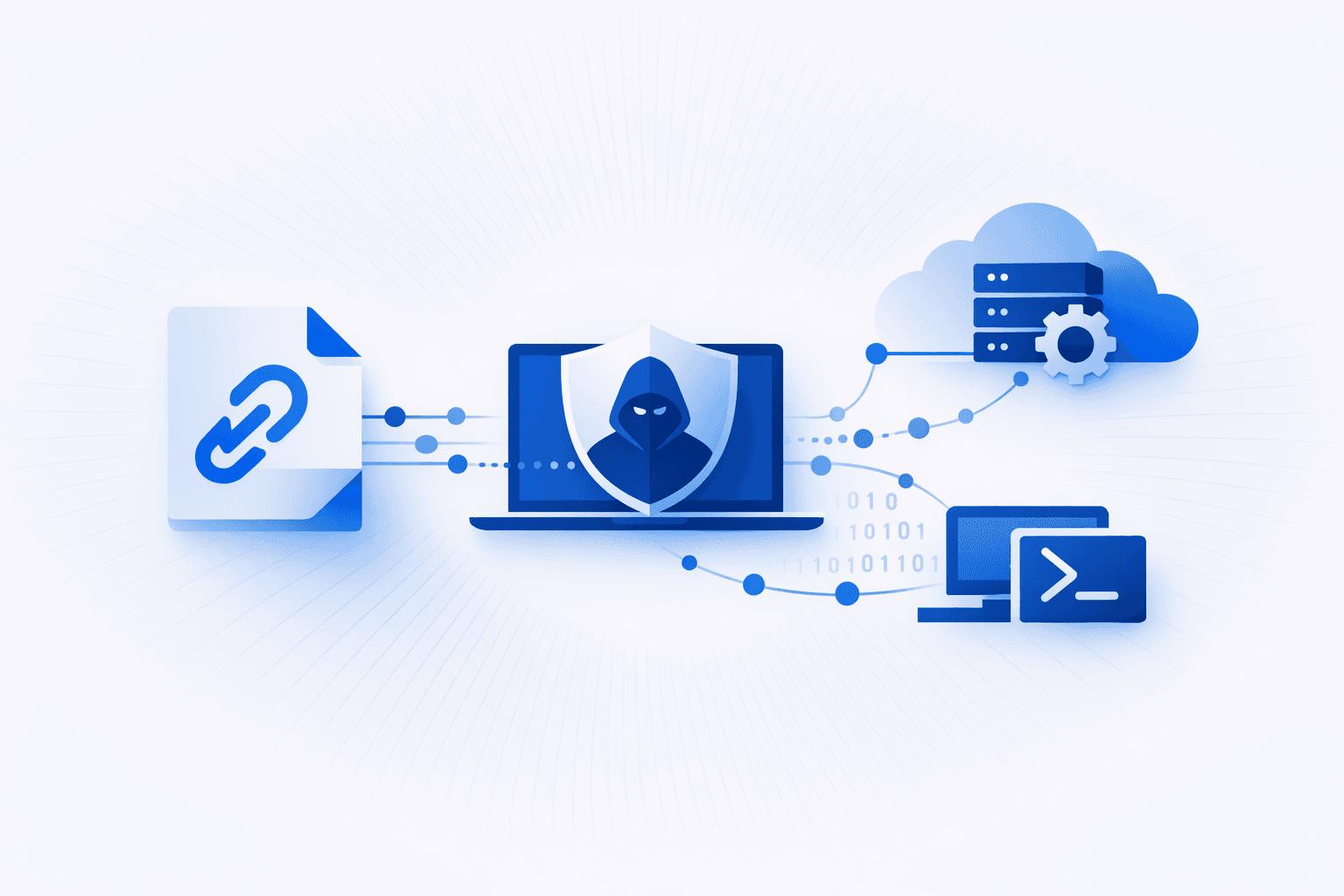
Threat actors are increasingly relying on *living-off-the-land* techniques and trusted tooling to establish persistent access on Windows endpoints. One campaign used weaponized Windows shortcut (`.LNK`) files disguised as investment-related PDFs to deliver **MoonPeak**, a remote access trojan assessed as a **XenoRAT** variant and linked to North Korea–aligned activity targeting South Korean investors and cryptocurrency traders. Opening the `.LNK` launches an obfuscated PowerShell-driven, multi-stage infection chain while displaying a decoy PDF; analysis also tied payload hosting to attacker-controlled GitHub repositories, reflecting “Living Off Trusted Sites (LOTS)” tradecraft. A separate dual-wave intrusion chain used phishing emails masquerading as *Greenvelope* invitations to steal webmail credentials (e.g., Outlook, Yahoo, AOL), then used the compromised accounts to register for and silently deploy **LogMeIn Resolve** (formerly *GoTo Resolve*) for persistent remote access. The installer (`GreenVelopeCard.exe`) was described as signed and configured to connect to attacker-controlled infrastructure, with follow-on actions including modifying service settings for elevated access and creating hidden scheduled tasks for resilience. Related threat intelligence reporting also highlighted broader “rogue RMM” abuse trends, including **Remcos** and **NetSupport Manager** delivery via paste-and-run lures and PowerShell/`cmd` execution chains (including use of the `finger` utility to fetch remote payloads), underscoring that adversaries are operationalizing legitimate remote administration software as a stealthy backdoor mechanism.
Jun 29, 2026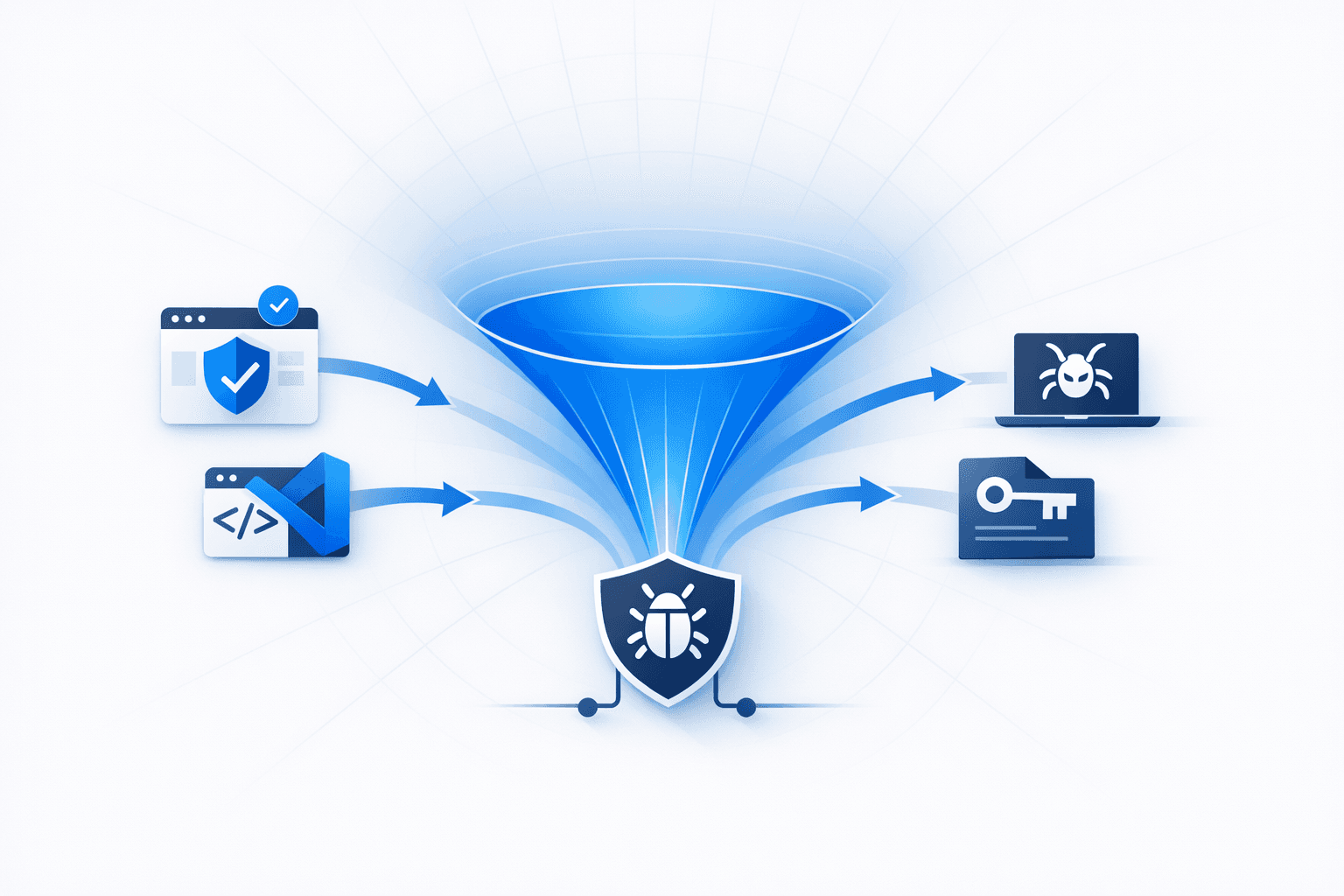
Multiple active malware campaigns are abusing *trusted distribution channels*—including Chrome/Edge extensions, Visual Studio Code extensions, and Google Ads/redirection infrastructure—to trick users into executing payloads that deliver **remote access trojans (RATs)** or **information stealers**. Huntress reported a malvertising-driven fake ad blocker extension, **NexShield**, that intentionally forces Chrome/Edge into a crash/DoS state by looping `chrome.runtime` port connections; on restart it displays a fake “security warning” and uses a **ClickFix-style** social engineering flow (“CrashFix”) to push users to paste and run clipboard-copied commands that trigger an obfuscated PowerShell download-and-execute chain, ultimately deploying the Python-based **ModeloRAT** in corporate environments. Separately, Trend Micro described **Evelyn Stealer** delivered via a trojanized **Visual Studio Code extension** that drops a malicious `Lightshot.dll` side-loaded by legitimate *Lightshot* (`Lightshot.exe`), then runs staged PowerShell and payload retrieval to steal browser credentials, cookies, crypto wallets, VPN/Wi‑Fi data, files, and screenshots before exfiltrating to an attacker-controlled FTP server—posing elevated risk when developer workstations are compromised. South Korea-focused activity also features prominently across several reports, with multiple delivery vectors leading to RAT deployment. ASEC documented **Remcos RAT** distributed via fake installers masquerading as *VeraCrypt* and via gambling-related “lookup” tools, using multi-stage obfuscated **VBS/PowerShell** chains and enabling credential theft, keylogging, and device surveillance (webcam/mic). Genians attributed “**Operation Poseidon**” to the **Konni APT**, describing spear-phishing that abuses Google’s advertising/tracking redirection (e.g., `ad.doubleclick.net` parameters) to make malicious links appear legitimate, redirecting victims to compromised WordPress infrastructure hosting ZIPs with LNK files that launch AutoIt-based loaders to run an **EndRAT** variant in memory. Nextron Systems reported widespread trojanized “free converter” apps promoted via malicious Google ads and lookalike converter sites (e.g., `ez2convertapp[.]com`, `convertyfileapp[.]com`), with some payloads signed using abused/rotating code-signing certificates (e.g., BLUE TAKIN LTD, TAU CENTAURI LTD, SPARROW TIDE LTD) to evade trust checks while installing persistent backdoors.
Jun 29, 2026