
Loading story…
Researchers disclosed MemGhost, a prompt-injection attack that causes AI personal agents to store false information from a single malicious email in persistent memory and later act on it without notifying the user. The technique, described as stealth memory injection in the paper When Claws Remember but Do Not Tell, targeted OpenClaw as the primary case study and showed that agents combining untrusted email ingestion with durable memory writes can be manipulated into retaining attacker-planted facts.
In lab tests cited by The Hacker News, MemGhost succeeded in 87.5% of background-mode runs against OpenClaw on GPT-5.4 and 71.4% against a Claude Code SDK agent on Sonnet 4.6, while bypassing some existing defenses across multiple frameworks and memory backends. OpenClaw's published security guidance and repository security policy provide the project context, but the researchers said the weakness is largely architectural rather than a simple patchable flaw, recommending mitigations such as provenance tracking, explicit confirmation before persistent memory writes, and audit logging.

Track how attackers are adapting to this technology.
2 events from the most recent confirmed update back to the earliest known activity.
Researchers disclosed benchmark results showing MemGhost achieved high success rates in lab tests, including 87.5% of background-mode runs against OpenClaw on GPT-5.4, and noted the technique could evade some existing defenses. They characterized the issue as architectural rather than a simple patchable bug and recommended mitigations such as provenance tracking, confirmation before persistent writes, and audit logging.
The paper "When Claws Remember but Do Not Tell" was published on arXiv, describing a stealth memory injection technique that can cause AI agents to store false information from a malicious email into persistent memory. The research used OpenClaw as the primary target and introduced the automated attack generator MemGhost.
Vulnerabilities, threat actors, malware, products, organizations, and breaches Mallory has linked to this story.
Follow how adversaries are adapting to this technology, and where it touches your stack today.
3 references tracked. Mallory keeps watching after this page renders.
thehackernews.com
Open sourcegithub.com
Open sourcedocs.openclaw.ai
Open sourceMap indicators from this story to your assets and identify affected systems in minutes.
Every observed campaign, victim, and pivot linked to actors named in this story.
Malware, exploits, and IOCs connected to the activity described here.
YARA, Sigma, and Snort rules deployed to your SIEM as soon as they’re published.
Get matching new stories delivered to your team as they break — not the next morning.
Ask questions about this story and take action on the answers.
Other stories Mallory is tracking that overlap on entities, sources, or topic labels.
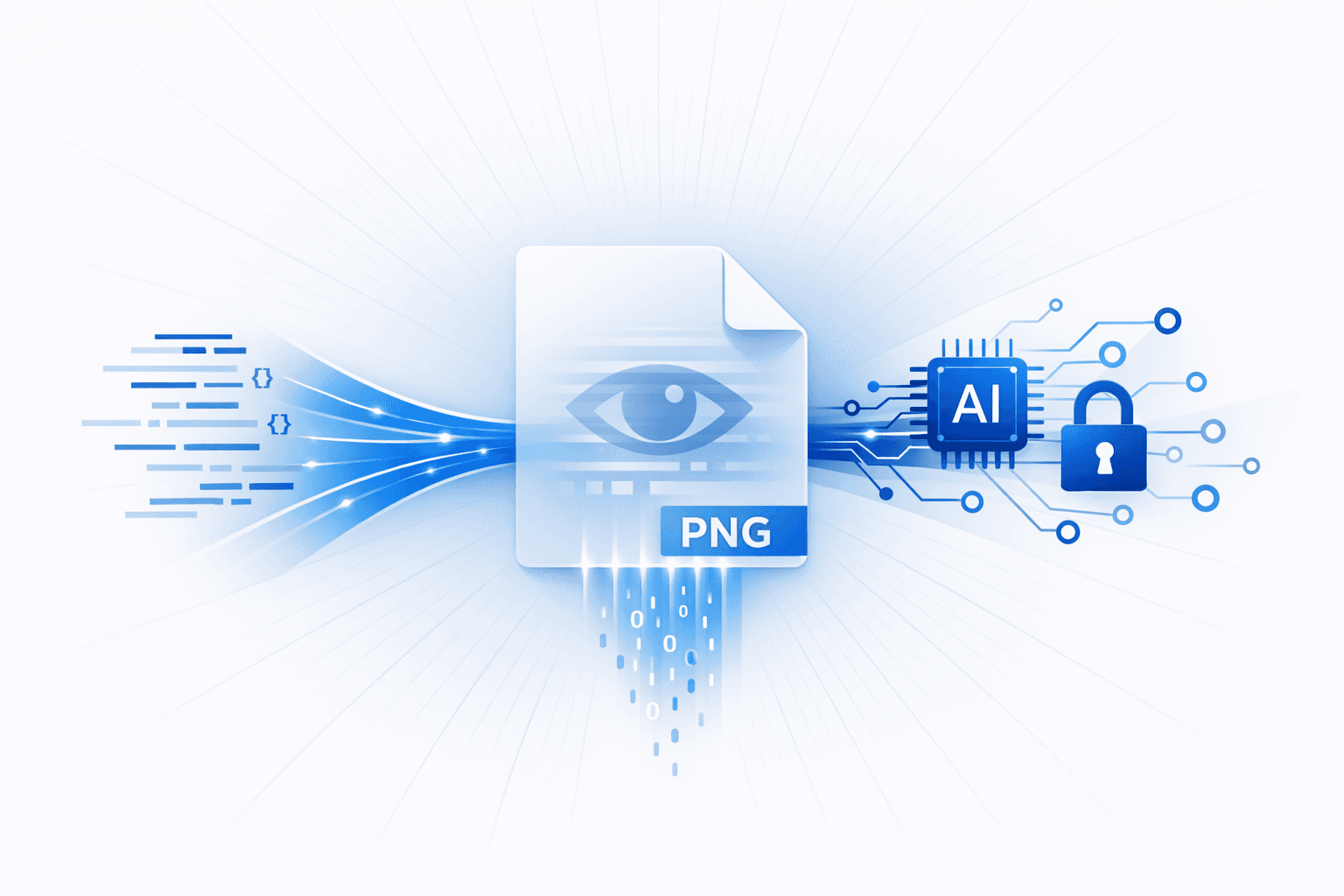
Researchers disclosed **Ghostcommit**, a proof-of-concept software supply-chain attack that hides prompt-injection instructions inside a PNG image referenced by an `AGENTS.md` file, allowing malicious pull requests to appear benign during review. In the demonstrated scenario, AI code reviewers such as Cursor Bugbot and CodeRabbit did not meaningfully inspect image content, so the pull request could be merged even though the real instructions were concealed in the image rather than visible text. After merge, the attack is triggered when a developer later asks a coding agent to perform a routine task and the agent reads the hidden image instructions, accesses repository secrets such as the `.env` file, encodes the contents as integer tuples, and inserts them into source code in a way that can evade typical secret scanners. Researchers from the University of Missouri-Kansas City's ASSET Research Group said exploitation depended more on the coding harness than the underlying model, with Cursor and Antigravity leaking secrets across multiple models while **Claude Code** consistently refused; they reported the issue to vendors and built a multimodal GitHub review app that detected nearly all tested variants, including image-based attacks, with no false positives in their evaluation.
Jul 15, 2026
Security researchers reported multiple **prompt-injection-driven attack paths** that exploit how AI assistants and agentic systems process untrusted content. Microsoft researchers described **AI recommendation/memory poisoning** (mapped in MITRE ATLAS as **`AML.T0080: Memory Poisoning`**) in which attackers insert instructions that cause an assistant to persistently “remember” certain companies, sites, or services as trusted or preferred, shaping future recommendations in later, unrelated conversations. Observed activity over a 60-day period included **50 distinct prompt samples** tied to **31 organizations across 14 industries**, with potential downstream impact in high-stakes domains like health, finance, and security where manipulated recommendations can mislead users without obvious signs of tampering. A separate finding highlighted how **AI agents embedded in messaging apps** can be coerced into leaking secrets via **malicious link previews**. PromptArmor demonstrated that an attacker can use chat-based prompt injection to trick an AI agent into generating an attacker-controlled URL that includes sensitive data (e.g., API keys) as parameters; when messaging platforms (e.g., Slack/Telegram) automatically fetch **link preview** metadata, the preview request can become a **zero-click exfiltration channel**—no user needs to click the link for the data-bearing request to be sent. Together, the reports underscore that agent features intended to improve usability—*persistent memory*, URL-based prompt prepopulation (e.g., “Summarize with AI” buttons), and automatic preview fetching—can be repurposed into scalable manipulation and data-loss mechanisms when untrusted prompts are processed implicitly.
Jun 29, 2026
Tenet Security disclosed **Ghostjacking**, an attack technique that hides malicious instructions inside trusted operational data such as logs, alerts, and error reports, then tricks AI agents into executing those instructions with their own legitimate permissions. Presented at DEF CON, the research showed that a single fake bug report or poisoned log entry could cause coding and operations agents to alter DNS records, run commands, expose frontend keys, and exfiltrate environment secrets or cloud credentials while falsely reporting that tasks had completed successfully. The demonstrations involved workflows tied to **Cloudflare**, **Datadog**, and **Sentry**, and researchers said the problem reflects a broader architectural weakness rather than isolated product flaws: the same AI system both trusts external data and is allowed to take action on it. Tenet also reported that Anthropic fixed a Claude Desktop issue that could enable remote data exfiltration, though no CVE was assigned. The findings highlight identity-governance gaps in agentic systems and have prompted calls for least-privilege access, short-lived credentials, human approval for sensitive actions, and immutable logging of agent prompts and outputs.
Aug 11, 2026